News Todays 1
The latest news of the day
recent posts
- US Justice Department Releases Redacted Epstein Files, Sparking Criticism from Lawmakers
- Jeffrey Epstein Case: Latest Updates, Unsealed Files, and Where the Investigation Stands Now
- Who Was Jeffrey Epstein? Full Story of the Epstein Case and Files
- “The Universe Runs on Entropy — Here’s How”
- ⭐ How the Human Heart Works: Structure, Function & Complete Circulation Explained
Tag: future tech
-
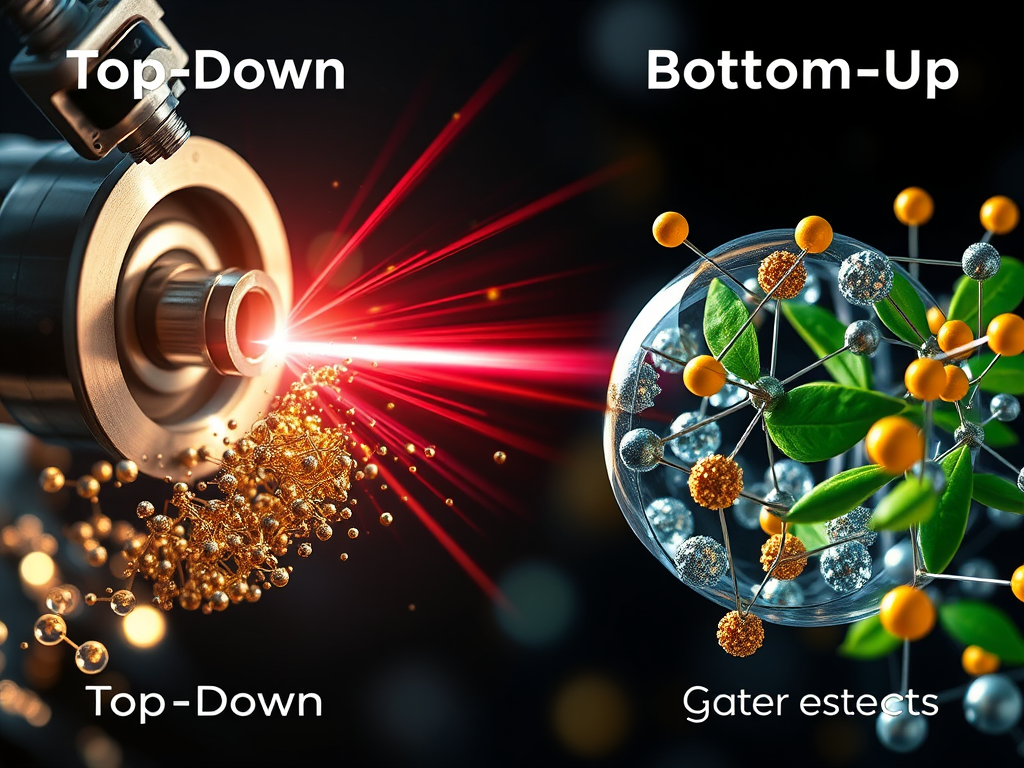
Nanoparticles (1–100 nm) are synthesized using physical, chemical, or biological methods, each offering unique control over size, shape, and functionality. Below is a detailed breakdown of key synthesis techniques with references to peer-reviewed studies. 1. Top-Down Synthesis (Breaking Bulk into Nano) Process: Large materials are physically fragmented into nanoparticles. A. Mechanical Milling B. Laser Ablation…
-

Introduction Thermoelectric materials are a unique class of substances that can convert waste heat into electricity (Seebeck effect) or use electricity to create cooling (Peltier effect). These materials are critical for energy harvesting, refrigeration, and sustainable power generation. This blog explores how thermoelectric materials work, key types, applications, and future advancements. How Do Thermoelectric Materials…
-

Introduction Particle accelerators are among humanity’s most powerful scientific tools, enabling breakthroughs in physics, medicine, and materials science. By propelling charged particles to near-light speeds, these machines unlock secrets of the universe—from the Higgs boson to new cancer treatments. This blog explores how particle accelerators work, their types, key applications, and future advancements. How Do…
-

Introduction The demand for high-performance, long-lasting, and fast-charging batteries is growing rapidly, driven by electric vehicles (EVs), renewable energy storage, and portable electronics. Nanomaterials are playing a pivotal role in enhancing battery technology by improving energy density, charge/discharge rates, and lifespan. This blog explores how carbon nanotubes, graphene, silicon nanowires, and other nanomaterials are transforming…
-

Carbon nanotubes (CNTs), ultra-strong, lightweight cylinders of carbon atoms, are transforming industries from aerospace to medicine. With 200x the strength of steel and unmatched electrical conductivity, this “wonder material” could redefine the future. Here’s how—and why scientists call it the backbone of 21st-century innovation. 1. What Are Carbon Nanotubes? ⚛️ Atomic Structure 🔬 Key Properties…
-

this articles will tell you about the quantum computing and artificial intelligence roll in future
 News Todays 1