News Todays 1
The latest news of the day
recent posts
- US Justice Department Releases Redacted Epstein Files, Sparking Criticism from Lawmakers
- Jeffrey Epstein Case: Latest Updates, Unsealed Files, and Where the Investigation Stands Now
- Who Was Jeffrey Epstein? Full Story of the Epstein Case and Files
- “The Universe Runs on Entropy — Here’s How”
- ⭐ How the Human Heart Works: Structure, Function & Complete Circulation Explained
Tag: Education
Here we are providing the educational update, opportunities and vacancies in various fields.
-

Introduction String theory is one of the most ambitious—and controversial—attempts to unify quantum mechanics and general relativity into a single “Theory of Everything.” Yet, after 50+ years of research, it remains a beautiful mystery, full of untested predictions and mathematical elegance. Here’s why string theory is still physics’ greatest unsolved puzzle: 1. The Core Idea:…
-

Introduction Black holes—cosmic monsters where gravity crushes matter into oblivion—challenge our understanding of physics. At their edges (event horizons) and cores (singularities), Einstein’s general relativity (governing gravity) collides with quantum mechanics (ruling the subatomic). This conflict hints at a deeper theory: quantum gravity. Here’s how black holes probe the quantum universe: 1. The Black Hole…
-
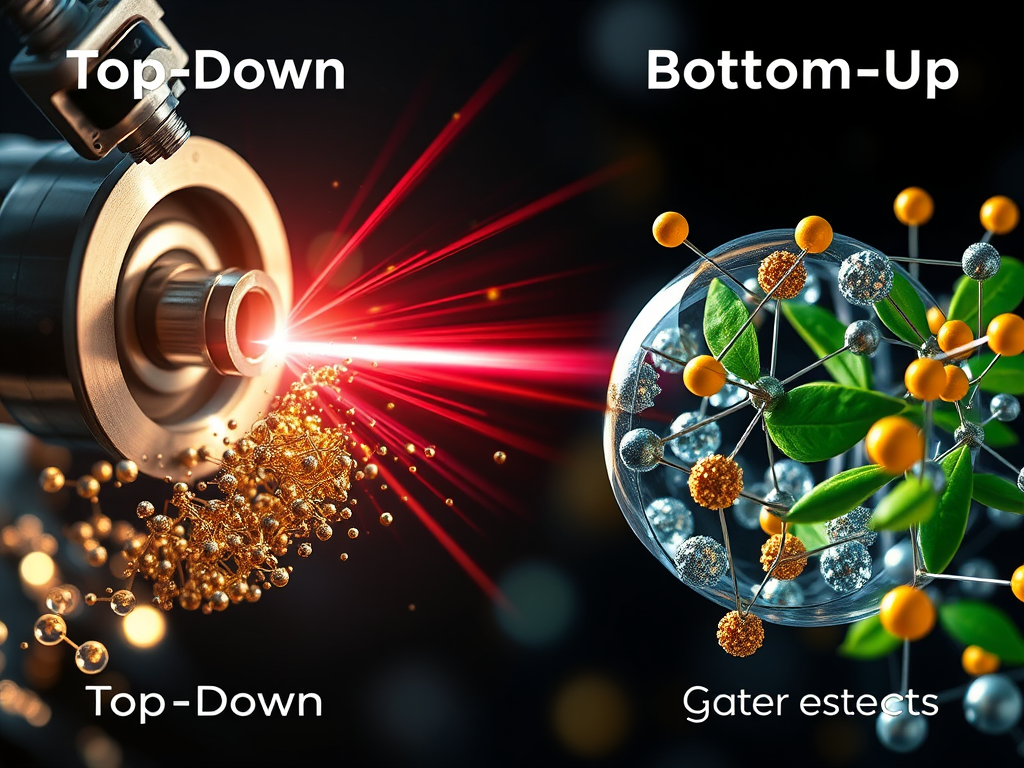
Nanoparticles (1–100 nm) are synthesized using physical, chemical, or biological methods, each offering unique control over size, shape, and functionality. Below is a detailed breakdown of key synthesis techniques with references to peer-reviewed studies. 1. Top-Down Synthesis (Breaking Bulk into Nano) Process: Large materials are physically fragmented into nanoparticles. A. Mechanical Milling B. Laser Ablation…
-

Introduction Nanoscience is transforming agriculture by offering precision farming, enhanced crop yields, and eco-friendly solutions to global food security challenges. By leveraging nanoparticles, nanosensors, and nano-enabled delivery systems, farmers can optimize resource use, reduce chemical waste, and combat climate change impacts. This blog explores the key applications, benefits, and future prospects of nanoscience in agriculture.…
-

The banking industry is undergoing a radical transformation, driven by AI, blockchain, quantum computing, and decentralized finance (DeFi). The future of banking will be faster, more secure, and hyper-personalized, with traditional banks competing against digital-native financial ecosystems. Here’s what the future holds: 1. AI-Powered Banking ✅ Hyper-Personalization – AI analyzes spending habits to offer real-time…
-
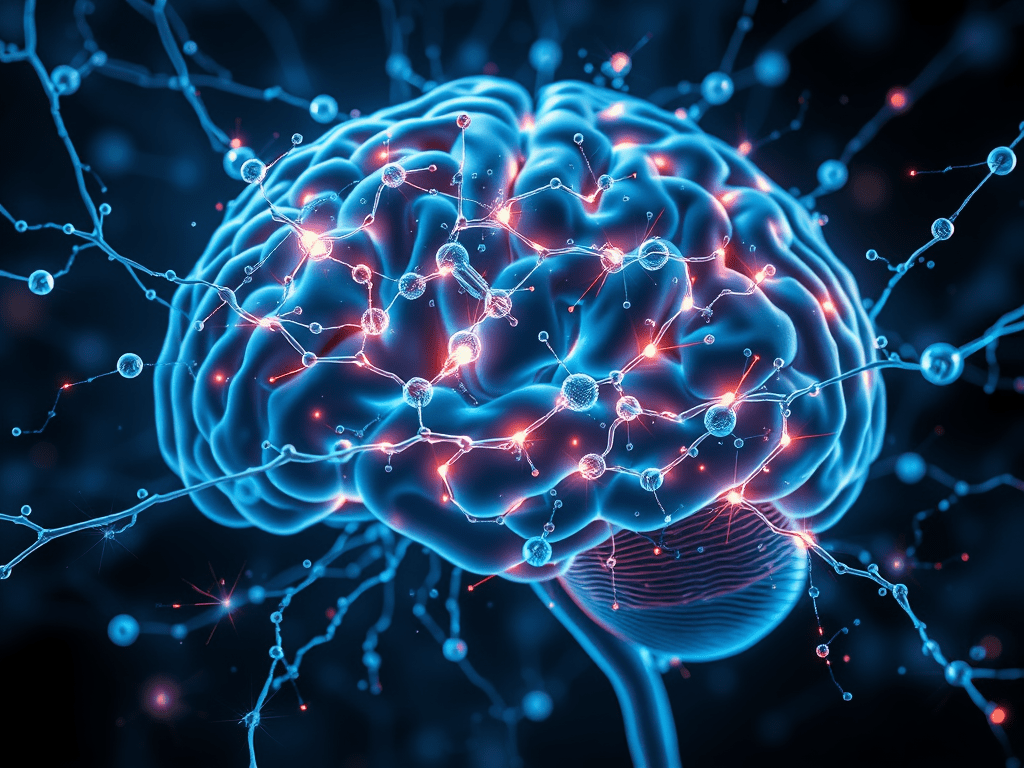
Introduction Nanotechnology is revolutionizing neurology, offering groundbreaking solutions for brain diseases, nerve damage, and neurological disorders. By operating at the molecular level, nanotech enables precise diagnostics, targeted drug delivery, and neural regeneration, transforming how we treat conditions like Alzheimer’s, Parkinson’s, stroke, and spinal cord injuries. This blog explores the key applications, innovations, and future potential…
-
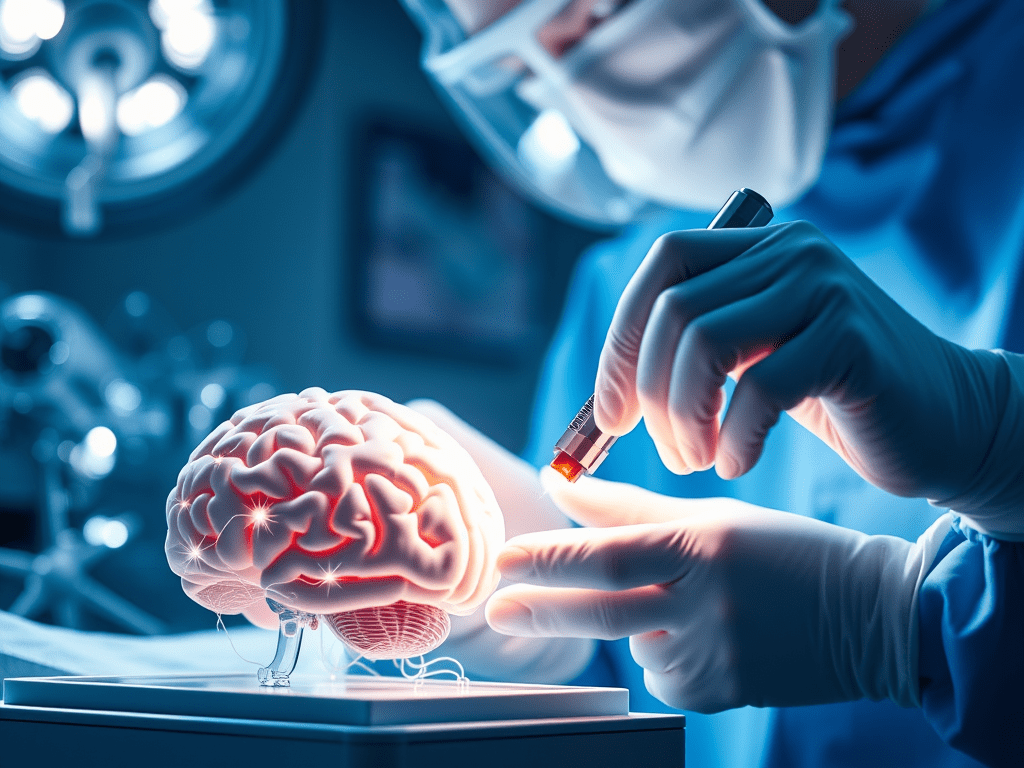
Introduction Nanotechnology is transforming brain surgery, enabling precision-targeted treatments, minimally invasive procedures, and enhanced recovery for conditions like tumors, epilepsy, and neurodegenerative diseases. By leveraging nanoscale materials and devices, surgeons can now operate with unprecedented accuracy while minimizing damage to healthy brain tissue. This blog explores the key applications, breakthroughs, and future potential of nanotechnology…
-

Introduction Thermoelectric materials are a unique class of substances that can convert waste heat into electricity (Seebeck effect) or use electricity to create cooling (Peltier effect). These materials are critical for energy harvesting, refrigeration, and sustainable power generation. This blog explores how thermoelectric materials work, key types, applications, and future advancements. How Do Thermoelectric Materials…
-

Introduction Particle accelerators are among humanity’s most powerful scientific tools, enabling breakthroughs in physics, medicine, and materials science. By propelling charged particles to near-light speeds, these machines unlock secrets of the universe—from the Higgs boson to new cancer treatments. This blog explores how particle accelerators work, their types, key applications, and future advancements. How Do…
-

Introduction The fusion of nanotechnology and artificial intelligence (AI) is unlocking groundbreaking innovations across medicine, computing, materials science, and robotics. While AI enhances nanoscale research with data-driven insights, nanotechnology provides AI with ultra-efficient hardware for faster, smarter decision-making. This blog explores how these two cutting-edge fields intersect, their key applications, and future possibilities. How AI…
 News Todays 1