• The World’s Largest Particle Accelerators: Giants of Physics

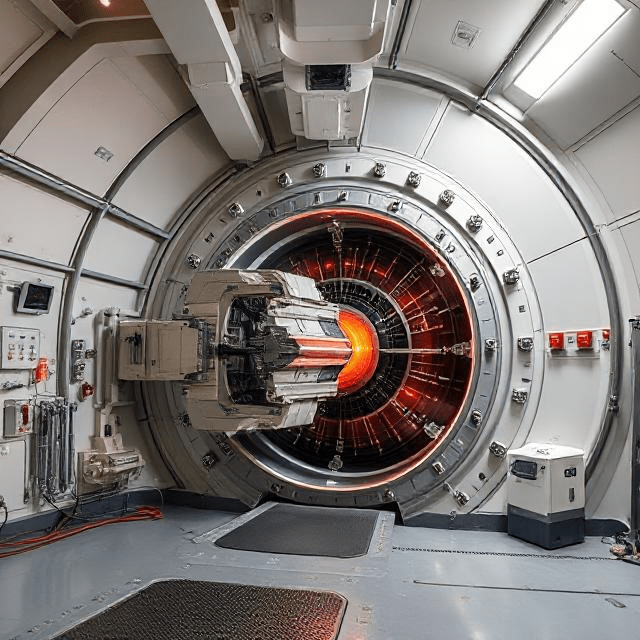
    Particle accelerators are the ultimate tools for exploring the fundamental building blocks of the universe. The largest ones push particles to near-light speeds, creating extreme conditions that replicate the early universe. Here’s a look at the biggest and most powerful particle accelerators in the world.


    1. Large Hadron Collider (LHC) – CERN, Switzerland/France

    🔹 Circumference: 27 km (17 miles) – Largest in the world
    🔹 Energy: 13–14 TeV (trillion electron volts)
    🔹 Purpose:

    • Discovered the Higgs boson (2012)
    • Searches for dark matter, extra dimensions, antimatter
    • Tests Standard Model of particle physics
      🔹 Next Upgrade: High-Luminosity LHC (HL-LHC, 2029) – 10x more collisions

    2. Future Circular Collider (FCC) – Proposed by CERN

    🔹 Circumference: 91–100 km (Under study)
    🔹 Energy: Up to 100 TeV (7x more powerful than LHC)
    🔹 Goal:

    • Explore “post-Higgs” physics
    • Investigate supersymmetry, quantum gravity
      🔹 Timeline: Possible construction by 2040s

    3. Super Proton-Proton Collider (SPPC) – China (Proposed)

    🔹 Circumference: 52–100 km (Planned for 2035)
    🔹 Energy: 50–70 TeV
    🔹 Goal:

    • Compete with CERN’s FCC
    • Study matter-antimatter asymmetry

    4. Relativistic Heavy Ion Collider (RHIC) – Brookhaven, USA

    🔹 Circumference: 3.8 km
    🔹 Energy: 200 GeV (gold ions)
    🔹 Purpose:

    • Creates quark-gluon plasma (early-universe state)
    • Studies proton spin structure

    5. Tevatron (Decommissioned) – Fermilab, USA

    🔹 Circumference: 6.3 km
    🔹 Energy: 1.96 TeV
    🔹 Legacy:

    • Discovered top quark (1995)
    • Paved the way for LHC

    6. DESY (Electron Synchrotron) – Germany

    🔹 Circumference: 6.3 km (HERA ring, now decommissioned)
    🔹 Current Focus:

    • PETRA III (X-ray synchrotron for materials science)
    • FLASH (Free-electron laser)

    7. SLAC (Linear Accelerator) – USA

    🔹 Length: 3.2 km (Longest linear accelerator)
    🔹 Energy: 50 GeV electrons
    🔹 Purpose:

    • Stanford Linear Collider (SLC) – Studied Z boson
    • LCLS (X-ray laser for molecular imaging)

    Future of Giant Accelerators

    🔹 Compact Accelerators?

    • Plasma wakefield tech could shrink future accelerators (e.g., 1km → 100m)
      🔹 International Collaboration?
    • Next-gen colliders may require global funding (e.g., FCC in Europe vs. SPPC in China)

    Conclusion

    The LHC remains the king of particle colliders, but future machines like the FCC and SPPC could dwarf it. These megaprojects push the limits of engineering and physics, seeking answers to dark matter, extra dimensions, and the origins of the universe.

    Which accelerator do you find most exciting? Comment below!


    Want a deep dive into how the LHC detects particles? Let me know! 🔬

  • Particle Accelerators: Powering Discoveries at the Edge of Physics

    Introduction

    Particle accelerators are among humanity’s most powerful scientific tools, enabling breakthroughs in physics, medicine, and materials science. By propelling charged particles to near-light speeds, these machines unlock secrets of the universe—from the Higgs boson to new cancer treatments.

    This blog explores how particle accelerators work, their types, key applications, and future advancements.


    How Do Particle Accelerators Work?

    Particle accelerators use electric fields to speed up charged particles (electrons, protons, ions) and magnetic fields to steer them. The basic components include:

    1. Particle Source (e.g., electron gun, ion generator)
    2. Acceleration Stages (Radiofrequency cavities, linear/circular paths)
    3. Beam Control (Magnets for focusing/steering)
    4. Collision/Detection Zone (Where particles smash into targets or each other)

    Key Equation (Lorentz Force):

    F = q(E + v.B)

    • F = Force on particle
    • q = Particle charge
    • E = Electric field
    • v = Particle velocity
    • B = Magnetic field

    Types of Particle Accelerators

    1. Linear Accelerators (LINACs)

    • How it works: Particles accelerate in a straight line using RF waves.
    • Applications:
    • Cancer radiation therapy (Proton therapy)
    • X-ray free-electron lasers (e.g., SLAC’s LCLS for molecular movies) [1]

    2. Circular Accelerators (Synchrotrons & Cyclotrons)

    • How it works: Particles spiral outward in a magnetic field (cyclotron) or stay in a fixed ring (synchrotron).
    • Examples:
    • Large Hadron Collider (LHC) (CERN) – Discovers new particles (Higgs boson) [2]
    • Diamond Light Source – Studies materials with synchrotron X-rays

    3. Colliders vs. Fixed-Target Machines

    • Colliders (e.g., LHC): Smash beams head-on for maximum energy.
    • Fixed-target (e.g., Fermilab’s Main Injector): Fire beams at stationary samples.

    Key Applications of Particle Accelerators

    1. Fundamental Physics

    • Discovering subatomic particles (e.g., Higgs boson, quarks)
    • Testing quantum field theories (e.g., Standard Model)

    2. Medicine

    • Proton therapy (Precise tumor targeting with minimal side effects)
    • Radioisotope production (e.g., Technetium-99m for diagnostics) [3]

    3. Industry & Materials Science

    • Synchrotron imaging (Analyzing battery materials, ancient artifacts)
    • Ion implantation (Making semiconductor chips)

    4. Energy & Environment

    • Nuclear waste transmutation (Accelerator-driven systems reduce radioactivity)
    • Fusion research (Heating plasma in tokamaks)

    Future of Particle Accelerators

    🔹 Compact Accelerators (Laser-plasma wakefield accelerators – tabletop-sized!) [4]
    🔹 Energy-Efficient Designs (Superconducting magnets, cryogenic cooling)
    🔹 Quantum Accelerators (Exploring particle-wave duality effects)


    Challenges

    Cost & Size (LHC cost ~$4.75B; 27km circumference)
    Energy Consumption (CERN uses ~200MW – like a small city!)
    Data Deluge (LHC generates 1PB/sec – requires AI filtering)


    Conclusion

    From unlocking the universe’s building blocks to fighting cancer, particle accelerators are engineering marvels driving human progress. As technology miniaturizes and AI optimizes them, their impact will only grow.


    References

    [1] SLAC National Lab, “LCLS: The World’s First X-ray Laser”, 2023.
    [2] CERN, “Higgs Boson Discovery at the LHC”, Nature, 2012.
    [3] IAEA, “Medical Isotope Production with Cyclotrons”, 2021.
    [4] Berkeley Lab, “Laser-Plasma Accelerators”, Physical Review Letters, 2023.


  • Nanotechnology and Artificial Intelligence: A Powerful Convergence

    Introduction

    The fusion of nanotechnology and artificial intelligence (AI) is unlocking groundbreaking innovations across medicine, computing, materials science, and robotics. While AI enhances nanoscale research with data-driven insights, nanotechnology provides AI with ultra-efficient hardware for faster, smarter decision-making.

    This blog explores how these two cutting-edge fields intersect, their key applications, and future possibilities.


    How AI is Revolutionizing Nanotechnology

    1. Accelerating Nanomaterial Discovery

    • AI-Powered Simulations
    • Machine learning (ML) models predict nanomaterial properties (e.g., graphene conductivity) 100x faster than lab experiments.
    • Example: Google DeepMind’s GNoME discovered 2.2 million new crystals (including 380,000 stable nanomaterials) [1].
    • Automated Nanofabrication
    • AI-driven robots (e.g., MIT’s “Nano-Chef”) optimize chemical reactions for nanoparticle synthesis [2].

    2. Smart Nanosensors & AI Diagnostics

    • Medical Nanobots with AI
    • Nanoparticles detect cancer biomarkers → AI analyzes data for early diagnosis (e.g., Harvard’s DNA nanorobots).
    • Environmental Monitoring
    • AI-powered nanosensors detect pollutants (e.g., IBM’s “electronic nose” with carbon nanotubes) [3].

    3. Nano-Optimized AI Hardware

    • Neuromorphic Nanocircuits
    • Memristors (nanoscale resistors) mimic brain synapses → energy-efficient AI chips (e.g., Intel’s Loihi 2).
    • Quantum AI Processors
    • Nanoscale qubits (e.g., silicon spin qubits) enable faster machine learning [4].

    How Nanotechnology Enhances AI

    1. Faster, Smaller AI Hardware

    • Carbon Nanotube Transistors
    • Replace silicon in chips → 5x faster processing (e.g., MIT’s “Brain-on-a-Chip”).
    • Graphene-Based AI Accelerators
    • Enable ultra-low-power edge AI (used in drones and IoT devices).

    2. Improved Data Storage

    • DNA Nano-Storage
    • 1 gram of DNA stores 215 petabytes → AI databases become smaller & more efficient.
    • Atomic-Scale Memory (IBM’s Atomic HDD)
    • Stores data on single atoms → 200x denser than SSDs.

    3. AI-Driven Nanorobotics

    • Targeted Drug Delivery
    • AI guides nanobots to tumors (e.g., ETH Zurich’s magnetic nano-swimmers).
    • Nano-Factories
    • AI-controlled molecular assemblers build materials atom-by-atom.

    Future Applications

    🔹 Self-Learning Nanobots (Autonomous disease treatment)
    🔹 AI-Designed Quantum Materials (Room-temperature superconductors)
    🔹 Nano-Neural Interfaces (Brain-AI merging via neural dust)


    Challenges

    Ethics & Safety (AI-controlled nanobots, unintended toxicity)
    Scalability (Mass-producing nano-AI systems)
    Energy Demands (Powering trillions of nanosensors)


    Conclusion

    The synergy of nanotechnology and AI is creating a new era of intelligent matter—where materials compute, learn, and adapt. From nanoscale AI chips to medical nanorobots, this convergence will redefine industries in the next decade.


    References

    [1] Google DeepMind, “GNoME: AI for Material Discovery”, Nature, 2023.
    [2] MIT, “AI-Guided Nanomaterial Synthesis”, Science Robotics, 2022.
    [3] IBM Research, “Carbon Nanotube Sensors for AI Air Quality Monitoring”, 2023.
    [4] Intel, “Quantum AI with Silicon Qubits”, IEEE, 2024.


    Want a deeper dive into AI-driven nanomedicine? Ask in the comments! 🚀

  • Nanotechnology and Supercomputing: A Synergy for the Future

    Introduction

    The intersection of nanotechnology and supercomputing is driving unprecedented advancements in computational power, energy efficiency, and miniaturization. As traditional silicon-based computing approaches its physical limits, nanomaterials and quantum-scale innovations are paving the way for next-generation supercomputers capable of solving complex global challenges.

    This blog explores how nanotechnology enhances supercomputing, key applications, and future possibilities.


    How Nanotechnology is Revolutionizing Supercomputers

    1. Nano-Enhanced Processors

    • Carbon Nanotubes (CNTs) & Graphene Transistors
    • Faster electron mobility than silicon → higher speed & lower power consumption
    • IBM & MIT have demonstrated CNT-based processors (5x efficiency gains) [1].
    • 2D Materials (e.g., MoS₂)
    • Enable ultra-thin, flexible supercomputing chips for space-constrained applications.

    2. Quantum Dots & Neuromorphic Computing

    • Quantum Dot Processors
    • Nanoscale semiconductor particles enable optical computing (light-speed data transfer).
    • Neuromorphic Chips (Brain-Inspired AI)
    • Nanoscale memristors mimic synapses → energy-efficient AI supercomputing (e.g., Intel’s Loihi) [2].

    3. Nanophotonics for Data Transfer

    • Plasmonic Nanowires
    • Replace copper wires with light-speed optical interconnects → reduces latency in exascale supercomputers.
    • Used in Frontier (world’s fastest supercomputer) for efficient data transfer [3].

    4. Nanocooling Solutions

    • Graphene & Diamond Nanoheaters
    • Dissipate heat 5x better than copper → prevents overheating in dense supercomputing clusters.
    • Phase-Change Materials (PCMs)
    • Nanoscale PCMs absorb heat during computation cycles (used in Fugaku supercomputer).

    Applications of Nano-Supercomputing

    1. Climate Modeling & Weather Prediction

    • Exascale supercomputers (e.g., Earth Simulator 3) use nano-enhanced processors to model hurricanes and climate change with 100x higher resolution.

    2. Drug Discovery & Genomics

    • Quantum-nano supercomputers (e.g., Google’s Quantum AI + AlphaFold) simulate protein folding in minutes vs. years.

    3. AI & Big Data Analytics

    • Neuromorphic nanochips enable real-time AI training (e.g., Tesla’s Dojo supercomputer).

    4. National Security & Cryptography

    • Post-quantum encryption via nanoscale lattice structures (resistant to quantum hacking).

    Future Trends

    🔹 DNA Nano-Computing (Storing data in synthetic DNA strands)
    🔹 Self-Assembling Nanocircuits (Reducing fabrication costs)
    🔹 Hybrid Quantum-Classical Supercomputers (e.g., IBM’s Condor)


    Challenges

    Scalability of nanofabrication techniques
    Quantum Decoherence in nano-quantum systems
    High R&D Costs for industrial adoption


    Conclusion

    Nanotechnology is breaking the barriers of Moore’s Law, enabling supercomputers to reach unprecedented speeds and efficiencies. From climate science to AI, this synergy will redefine what’s computationally possible.


    References

    [1] M. Shulaker et al., “Carbon Nanotube Microprocessors”, Nature, 2019.
    [2] Intel Labs, “Loihi 2: Neuromorphic Computing with Nanoscale Memristors”, 2023.
    [3] Oak Ridge National Lab, “Frontier: Nanophotonic Interconnects in Exascale Computing”, 2022.
    [4] RIKEN, “Fugaku’s Nano-Enhanced Cooling Systems”, IEEE, 2021.


    Want a deeper dive into quantum nano-supercomputing? Let me know! 🚀

  • Nanomaterials in Batteries: Revolutionizing Energy Storage

    Introduction

    The demand for high-performance, long-lasting, and fast-charging batteries is growing rapidly, driven by electric vehicles (EVs), renewable energy storage, and portable electronics. Nanomaterials are playing a pivotal role in enhancing battery technology by improving energy density, charge/discharge rates, and lifespan.

    This blog explores how carbon nanotubes, graphene, silicon nanowires, and other nanomaterials are transforming lithium-ion, solid-state, and next-generation batteries.


    Why Nanomaterials in Batteries?

    Nanomaterials (1–100 nm in size) offer unique advantages over conventional materials:
    Higher surface area → More active sites for electrochemical reactions
    Improved conductivity → Faster electron/ion transport
    Enhanced mechanical strength → Better structural stability
    Tunable properties → Customizable for specific battery needs


    Key Nanomaterials in Battery Technology

    1. Carbon Nanotubes (CNTs) & Graphene

    • Role: Conductivity enhancers and structural supports
    • Benefits:
    • Prevent electrode cracking (e.g., in silicon anodes)
    • Improve charge/discharge rates in Li-ion batteries
    • Example: Tesla’s use of graphene-enhanced batteries for higher energy density [1].

    2. Silicon Nanowires & Nanoparticles

    • Role: High-capacity anode material (10x more capacity than graphite)
    • Challenge: Volume expansion (~300%) causes degradation
    • Solution: Nanostructured silicon reduces cracking (e.g., Amprius Tech’s Si nanowire anodes) [2].

    3. Lithium Metal with Nanocoatings

    • Role: Enables solid-state batteries (higher energy density)
    • Nanocoating Benefits:
    • Prevents dendrite formation (safety improvement)
    • Extends cycle life (e.g., QuantumScape’s ceramic nanolayer) [3].

    4. MXenes & Transition Metal Oxides

    • Role: High-performance cathode materials
    • Benefits:
    • Faster Li-ion diffusion (e.g., V₂O₅ nanowires)
    • Higher voltage stability [4].

    Applications of Nano-Enhanced Batteries

    1. Electric Vehicles (EVs)

    • Nanomaterial Use: Si-graphene anodes, CNT conductive additives
    • Impact: Longer range, faster charging (e.g., Sila Nanotechnologies) [5].

    2. Smartphones & Wearables

    • Nanomaterial Use: Graphene supercapacitors, solid-state thin-film batteries
    • Impact: Ultra-fast charging (e.g., Samsung’s graphene balls) [6].

    3. Grid-Scale Energy Storage

    • Nanomaterial Use: Nano-coated Li-S batteries (higher capacity)
    • Impact: Lower cost per kWh for renewable storage [7].

    Challenges & Future Outlook

    Current Limitations:

    • High production cost of nanomaterials
    • Scalability issues in manufacturing
    • Long-term stability under extreme conditions

    Future Innovations:

    🔹 Self-healing nanomaterials for longer battery life
    🔹 AI-designed nanostructures for optimized performance
    🔹 Sustainable nano-batteries (e.g., bio-derived nanomaterials)


    Conclusion

    Nanomaterials are redefining the limits of battery technology, enabling faster charging, higher energy density, and improved safety. As research advances, we can expect nanotech-powered batteries to dominate EVs, electronics, and grid storage in the coming decade.


    References

    [1] Y. Gogotsi et al., “The Role of Graphene in Battery Applications”, Nature Energy, 2021.
    [2] Amprius Technologies, “Silicon Nanowire Anodes for High-Energy Batteries”, 2023.
    [3] QuantumScape, “Solid-State Batteries with Nanoceramic Separators”, Joule, 2022.
    [4] M. Naguib et al., “MXenes for Energy Storage”, Science, 2020.
    [5] Sila Nanotechnologies, “Silicon-Graphene Composite Anodes”, 2023.
    [6] Samsung Advanced Institute of Technology, “Graphene-Based Batteries”, ACS Nano, 2021.
    [7] P. Bruce et al., “Nanomaterials for Li-S Batteries”, Chemical Reviews, 2022.

  • Electric Field: Famous Applications Shaping Modern Technology

    Introduction

    Electric fields are fundamental to countless technologies that power our daily lives. From household appliances to cutting-edge scientific research, the manipulation of electric fields enables innovations in communication, medicine, energy, and more.

    But what exactly is an electric field, and how is it applied in real-world scenarios? Let’s explore the science behind electric fields and their most famous applications.


    What Is an Electric Field?

    An electric field is a region around a charged particle where an electric force is exerted on other charges. It is represented by electric field lines that show the direction and strength of the force.

    Key Formula:


    E = F/q

    • E = Electric field (N/C or V/m)
    • F = Force experienced by a charge (N)
    • q = Test charge (C)

    Electric fields can be static (unchanging, like in capacitors) or dynamic (varying with time, like in wireless signals).


    Top Applications of Electric Fields

    1. Electronics & Computing

    🔌 Transistors & Semiconductors

    • Electric fields control electron flow in transistors, the building blocks of microchips.
    • Used in CPUs, memory chips, and integrated circuits.

    📱 Touchscreens (Capacitive Sensing)

    • Smartphones and tablets detect touch via changes in the electric field.

    2. Medical Technologies

    Defibrillators (Heart Shock Devices)

    • Strong electric fields restore normal heart rhythms during cardiac arrest.

    🧠 Transcranial Stimulation (tES)

    • Weak electric fields stimulate brain neurons for treating depression and chronic pain.

    3. Wireless Communication & Radar

    📡 Antennas & Radio Waves

    • Oscillating electric fields generate electromagnetic waves for Wi-Fi, Bluetooth, and 5G.

    🛰 Radar & Satellite Communication

    • Electric fields in radar systems detect objects by reflecting radio waves.

    4. Energy & Power Systems

    High-Voltage Power Lines

    • Electric fields help transmit electricity efficiently over long distances.

    🔋 Capacitors & Supercapacitors

    • Store energy using electric fields between conductive plates.

    5. Industrial & Scientific Uses

    🖨 Xerography (Laser Printers & Photocopiers)

    • Electric fields attract toner particles to paper, creating printed images.

    🔬 Particle Accelerators (CERN, Fermilab)

    • Strong electric fields accelerate protons and electrons near light speed for physics research.

    6. Environmental & Everyday Applications

    🌫 Electrostatic Precipitators (Air Purifiers)

    • Remove smoke and dust by charging particles and attracting them to plates.

    🚗 Electric Vehicles (Battery & Motor Control)

    • Electric fields manage power flow in EV batteries and motors.

    Future Innovations Using Electric Fields

    🔹 Wireless Charging (Expanding beyond phones to EVs & home appliances)
    🔹 Plasma Medicine (Using electric fields to sterilize wounds & kill bacteria)
    🔹 Quantum Computing (Controlling qubits with precise electric fields)


    Conclusion

    Electric fields are invisible yet indispensable, driving advancements from lifesaving medical devices to high-speed internet. As technology evolves, new applications will continue to emerge, making electric fields a cornerstone of future innovations.

    What’s your favorite electric field application? Let us know in the comments!

  • Carbon Nanotubes: The Miracle Material Revolutionizing Tech, Medicine, and Space Exploration

    Carbon nanotubes (CNTs), ultra-strong, lightweight cylinders of carbon atoms, are transforming industries from aerospace to medicine. With 200x the strength of steel and unmatched electrical conductivity, this “wonder material” could redefine the future. Here’s how—and why scientists call it the backbone of 21st-century innovation.


    1. What Are Carbon Nanotubes?

    ⚛️ Atomic Structure

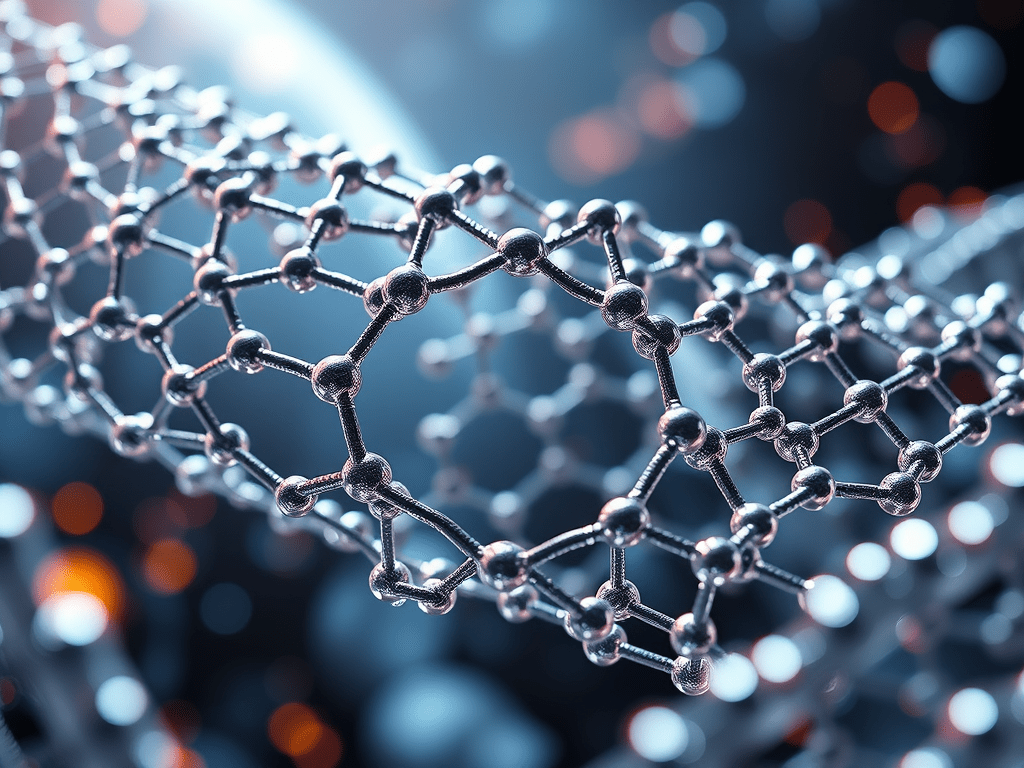
    • Made of rolled graphene sheets (single-layer carbon atoms in a hexagonal lattice).
    • Types:
      • Single-walled (SWCNTs) – 1 nm diameter, superb conductivity.
      • Multi-walled (MWCNTs) – Nested tubes, higher mechanical strength.

    🔬 Key Properties

    • Stronger than steel, lighter than aluminum.
    • Faster electron mobility than silicon (ideal for nanoelectronics).
    • Thermal conductivity surpassing diamond.

    2. Cutting-Edge Applications

    🚀 Aerospace & Defense

    • NASA’s Mars missions: CNT-reinforced composites for lighter, radiation-resistant spacecraft.
    • “Space elevator” dreams: Hypothetical megastructures could use CNTs for Earth-to-orbit cables.

    Next-Gen Electronics

    • Faster chips: IBM and TSMC test CNT-based transistors (beyond silicon limits).
    • Flexible displays: Samsung patents CNT-enabled foldable screens.

    🏥 Medical Breakthroughs

    • Targeted drug delivery: CNTs penetrate cells, releasing chemo only in tumors.
    • Neural implants: Ultra-thin CNT electrodes could restore movement to paralysis patients.

    🔋 Energy Revolution

    • Supercapacitors: Charge 10x faster than lithium-ion batteries (Toyota prototypes).
    • Hydrogen storage: CNT tanks may solve clean energy’s biggest hurdle.

    3. The Dark Side: Risks & Challenges

    ☠️ Toxicity Concerns

    • Some studies link inhaled CNTs to lung damage (asbestos-like risks).
    • Solution: Coatings or biodegradable variants in development.

    💰 Production Costs

    • $100–$1,000 per gram for high-purity CNTs—scaling up is critical.

    🛠️ Manufacturing Hurdles

    • “Entangled spaghetti problem”: Aligning CNTs perfectly remains a challenge.

    4. Who’s Leading the CNT Revolution?

    🏭 Key Companies

    • Nanocomp Technologies (now part of Materion) – Military armor, spacecraft shielding.
    • OCSiAl – World’s largest SWCNT producer (used in Tesla batteries).
    • Carbonics Inc. – Developing CNT-based 5G chips.

    🌍 Research Frontiers

    • MIT: Printing CNT spacecraft parts.
    • Stanford: Artificial muscles using CNT yarns.

    5. The Future: What’s Next?

    🔹 2025–2030: CNT-enhanced batteries dominate EVs.
    🔹 2030+: First CNT space elevator prototype?
    🔹 Medical nanobots: CNT-based surgery at the cellular level.


    Expert Quote

    “Carbon nanotubes are the closest thing we have to a real-life ‘unobtanium’—if we can mass-produce them, they’ll reshape civilization.”
    Dr. Ray Baughman, Nanotech Pioneer (UT Dallas)


    🚀 Want More Future Tech?
    Follow @NewsTodays1 for nanotech, AI, and space breakthroughs.


  • Could the Pharaohs Have Made a Computer? The Shocking Truth About Ancient High-Tech

    The Antikythera Mechanism (150–100 BCE) proves ancient civilizations had gear-based computing. But could the Egyptians—2,000 years earlier—have built something similar? From star-aligned pyramids to cryptic temple machinery, here’s the explosive debate over ancient Egypt’s lost “computers.”


    1. The Pyramids: A Stone Age Supercomputer?

    🔺 Mathematical Precision Beyond Bronze Age Tools

    • The Great Pyramid’s dimensions encode π (pi) and the golden ratio with 99.9% accuracy.
    • Its alignment to True North is more precise than medieval cathedrals.

    🌌 A Stargazing Machine?

    • The air shafts in Khufu’s pyramid point to Sirius, Orion’s Belt, and Thuban (the North Star in 2500 BCE).
    • Theorists like Robert Bauval suggest it was an astronomical calendar or star-mapping device.

    Counterargument

    • Mainstream Egyptologists say it’s a coincidence of ritual geometry—not proof of computation.

    2. The Hidden Waterworks: Hydraulic Analog Computers?

    💧 The Temple of Edfu’s “Primeval Ocean” Machine

    • Inscriptions describe a mysterious “naos” device that used water to simulate cosmic cycles.
    • Some speculate it was an analog computer modeling eclipses or Nile floods.

    ⚙️ The Osirion’s Gear-Like Stones

    • This mysterious underground structure at Abydos contains wheel-shaped carvings resembling gears.
    • Could these be remnants of a mechanical computer lost to time?

    3. The Missing Papyrus: Did the Egyptians Erase Their Tech?

    📜 The Alexandria Library Fire & Lost Knowledge

    • What if Egyptian “computers” were documented in scrolls burned with the Library of Alexandria (48 BCE)?
    • The Dendera Light carving (interpreted by some as an ancient lightbulb) hints at forgotten electrical knowledge.

    Skeptics’ Rebuttal

    • No physical evidence of gears, circuits, or software survives—just symbolic art and mythology.

    4. Modern Experiments: Rebuilding Pharaoh Tech

    🔧 The “Pharaoh’s Laptop” Hoax

    • A 2016 viral claim showed a hieroglyphic “laptop”—later debunked as a modern forgery.

    🤖 Could They Have Built a Mechanical Computer?

    • Yes, but…
      • They had pulleys, levers, and precise measurement tools.
      • However, no proof exists of interlocking gears (unlike the Antikythera).

    5. The Verdict: Did the Egyptians Have Computers?

    Maybe “Analog” Ones – Water clocks, star maps, and geometric models could qualify as proto-computers.
    No Digital Tech – No evidence of binary logic, programming, or electronics.

    What’s More Plausible?

    • They had advanced astronomy and engineering—perhaps lost over millennia.
    • Their “computers” were ritual objects, not Silicon Valley-style machines.

    Expert Quote

    “The Egyptians didn’t need silicon chips—their ‘computer’ was the night sky, the Nile’s floods, and the pyramids themselves.”
    Dr. Sarah Parcak, Space Archaeologist


    🚀 Want More Ancient Mysteries?
    Follow @NewsTodays1 for lost civilizations, forbidden archaeology, and high-tech history.


  • Quantum Dots: The Tiny Tech Powering the Next Big Revolution

    Quantum dots (QDs), nanoscale semiconductor particles just 2–10 nanometers wide, are emerging as a game-changer in displays, medicine, solar energy, and quantum computing. These “artificial atoms” harness quantum mechanics to emit precise colors, detect diseases, and even revolutionize computing. Here’s how they work—and why they’re about to go mainstream.


    1. What Are Quantum Dots?

    ⚛️ Nano-Sized Semiconductor Crystals

    • Made from materials like cadmium selenide (CdSe) or indium phosphide (InP).
    • Their size determines their color: smaller dots = blue light, larger dots = red light (quantum confinement effect).

    🔬 How They Work

    • When excited (by electricity or light), electrons jump energy levels, emitting ultra-pure, tunable light.
    • Unlike traditional LEDs, QDs produce perfectly saturated colors with minimal energy waste.

    2. Where Are Quantum Dots Used Today?

    🎯 Displays (QLED TVs & Screens)

    • Samsung, LG, and Sony use QDs to make brighter, more vibrant TVs (no OLED burn-in issues).
    • 50% more energy-efficient than standard LCDs.

    🏥 Medical Imaging & Cancer Detection

    • QDs glow under UV light, tagging tumor cells for precision surgery.
    • Example: MIT’s quantum dot system detects early-stage cancer better than traditional dyes.

    ☀️ Next-Gen Solar Panels

    • Quantum dot photovoltaics could boost solar efficiency beyond 30% (vs. ~22% for silicon).
    • Startups like Quantum Materials Corp are scaling production.

    💻 Quantum Computing & Encryption

    • QDs act as qubits (quantum bits) in solid-state quantum computers (e.g., Intel’s spin-qubit research).
    • Enable unhackable quantum communication via entangled photons.

    3. The Future: What’s Next for Quantum Dots?

    🚀 Micro-LED & Foldable Screens

    • Apple and Google are testing QDs for ultra-thin, flexible displays.

    🧪 Bio-Integrated Sensors

    • Injectable QDs could monitor glucose in diabetics or track drug delivery in real time.

    Quantum Internet

    • QDs may generate entangled photon pairs for ultra-secure networks.

    4. Challenges & Risks

    ⚠️ Toxicity Concerns

    • Cadmium-based QDs are being phased out for non-toxic alternatives (e.g., indium phosphide).

    💰 High Production Costs

    • Mass adoption requires cheaper, scalable manufacturing (solution-processing shows promise).

    🔬 Stability Issues

    • Some QDs degrade under prolonged UV exposure—research into protective coatings is ongoing.

    5. Key Players & Stocks to Watch

    📈 Public Companies

    • Nanoco Group (LSE: NANO) – Leader in cadmium-free QDs.
    • Quantum Materials Corp (OTC: QTMM) – Scaling production for displays and solar.

    🔬 Research Leaders

    • MIT, Berkeley Lab, and Los Alamos National Lab pushing breakthroughs.

    Expert Quote

    “Quantum dots are like LEGO blocks for light—we can engineer them to do almost anything.”
    Dr. Moungi Bawendi, MIT (Nobel Laureate in Chemistry, 2023)


    🚀 Want More Tech Insights?
    Follow @NewsTodays1 for updates on quantum tech, AI, and energy breakthroughs.


  • Quantum Dots in Space Science: Revolutionizing Satellite Imaging, Deep Space Communication, and Astrobiology

    Quantum dots (QDs), nanoscale semiconductor crystals, are no longer confined to Earthly applications. From ultra-sensitive space telescopes to next-gen propulsion systems, these tiny “artificial atoms” are poised to transform space exploration, astronomy, and satellite technology. Here’s how NASA, ESA, and private space firms are harnessing QDs for the final frontier.


    1. Quantum Dots in Space Telescopes & Imaging

    🔭 Sharper, Lighter, More Efficient Sensors

    • Traditional space telescopes (like Hubble) rely on bulky silicon detectors. QD-based sensors offer:
      • Higher light absorption (90%+ efficiency vs. 50% for silicon).
      • Tunable sensitivity (adjustable for UV, visible, or infrared light).
    • NASA’s future missions may use QDs to detect exoplanet atmospheres or faint cosmic signals.

    🌌 Infrared Astronomy Breakthroughs

    • QDs can convert infrared light into visible light, enabling cheaper, more compact deep-space cameras.
    • Potential use in James Webb Space Telescope (JWST) successors for studying early galaxies.

    2. Quantum Dots for Secure Space Communication

    📡 Quantum Key Distribution (QKD) in Orbit

    • QDs generate entangled photon pairs, enabling unhackable satellite communication.
    • China’s Micius satellite already tested QKD—QD tech could make it scalable.

    🛰️ Laser Communication Boost

    • QD-based lasers (e.g., quantum dot lasers) offer stable, high-power beams for inter-satellite links.
    • Could replace traditional RF systems, speeding up Mars-Earth data transfer.

    3. Quantum Dots in Spacecraft & Propulsion

    ☀️ Ultra-Efficient Solar Sails

    • QD-coated sails could reflect sunlight more efficiently, enabling faster propulsion (Breakthrough Starshot concept).

    Radiation-Hardened Electronics

    • QDs are more resistant to cosmic rays than silicon, ideal for long-duration missions (e.g., Mars trips).

    4. Astrobiology & Life Detection

    🧫 Glowing Biosensors for Extraterrestrial Life

    • QDs tagged with DNA or antibodies could detect microbial life on Europa or Enceladus.
    • Glow under UV light if they bind to organic molecules.

    🌠 Tracking Cosmic Organic Compounds

    • QD-based spectrometers may identify amino acids or lipids in asteroid samples.

    5. Challenges & Future Missions

    🚧 Obstacles to Overcome

    • Space radiation degradation (QDs must be shielded or made more durable).
    • Cryogenic operation (must work in extreme cold, like on Pluto).

    🚀 Upcoming Quantum Dot Space Tech

    • NASA’s Lunar Gateway may test QD sensors for radiation monitoring.
    • ESA’s ARIEL mission (2029) could use QDs to analyze exoplanet atmospheres.

    Expert Quote

    “Quantum dots could be the Swiss Army knife of space tech—cheaper, lighter, and far more versatile than traditional systems.”
    Dr. Sara Seager, MIT astrophysicist & exoplanet researcher


    🚀 Want More Space Tech Insights?
    Follow @NewsTodays1 for updates on quantum space tech, Mars missions, and exoplanet discoveries.