• Black Holes and Quantum Physics: A Clash of Titans

    Introduction

    Black holes—cosmic monsters where gravity crushes matter into oblivion—challenge our understanding of physics. At their edges (event horizons) and cores (singularities), Einstein’s general relativity (governing gravity) collides with quantum mechanics (ruling the subatomic). This conflict hints at a deeper theory: quantum gravity.

    Here’s how black holes probe the quantum universe:


    1. The Black Hole Information Paradox

    Hawking Radiation (Quantum Escape)

    • Stephen Hawking (1974) showed black holes emit radiation due to quantum fluctuations near the event horizon.
    • Virtual particle pairs form: one falls in, the other escapes as Hawking radiation.
    • Paradox: If the hole evaporates, does information (e.g., what fell in) vanish? Quantum mechanics forbids this!

    Current Solutions:

    🔹 Holographic Principle (AdS/CFT) – Information is encoded on the event horizon’s surface.
    🔹 Firewall Hypothesis – A quantum “wall of fire” destroys infalling matter.

    Ref: Hawking (1974) Nature [1]; Susskind (1995) The Black Hole War [2].


    2. Quantum Gravity at the Singularity

    • General relativity predicts a point of infinite density (singularity), but quantum effects must alter this.
    • Theories Attempting Unification:
    • String Theory: Singularities are fuzzy “fuzzballs” of strings.
    • Loop Quantum Gravity: Spacetime is granular, preventing infinities.

    Ref: Polchinski (1998) String Theory [3]; Rovelli (2004) Quantum Gravity [4].


    3. Black Holes as Quantum Computers?

    • ER = EPR Conjecture (Maldacena & Susskind):
    • Entangled particles (quantum “spooky action”) are connected by microscopic black holes.
    • Suggests spacetime emerges from quantum entanglement.

    Ref: Maldacena & Susskind (2013) Fortschritte der Physik [5].


    4. Experimental Probes

    LIGO & Quantum Jitters

    • Gravitational waves from merging black holes could reveal quantum spacetime foam.

    Analog Black Holes

    • Lab systems (e.g., Bose-Einstein condensates) simulate Hawking radiation.

    Ref: Unruh (1981) Analog Gravity [6].


    The Future: Bridging the Gap

    🔹 Quantum Telescopes – Imaging event horizons at Planck scales.
    🔹 Theory of Everything – Resolving the relativity-quantum clash.

    #BlackHoles #QuantumPhysics #HawkingRadiation #HolographicPrinciple


    Want a deep dive on holography? Ask below! 🌌🔬

    References

    [1] Hawking, S. W. (1974). Black hole explosions? Nature, 248, 30–31.
    [2] Susskind, L. (2008). The Black Hole War. Little, Brown.
    [3] Polchinski, J. (1998). String Theory. Cambridge University Press.
    [4] Rovelli, C. (2004). Quantum Gravity. Cambridge.
    [5] Maldacena, J., & Susskind, L. (2013). Cool horizons for entangled black holes. Fortschritte der Physik, 61(9), 781–811.
    [6] Unruh, W. G. (1981). Experimental black-hole evaporation? Physical Review Letters, 46, 1351–1353.
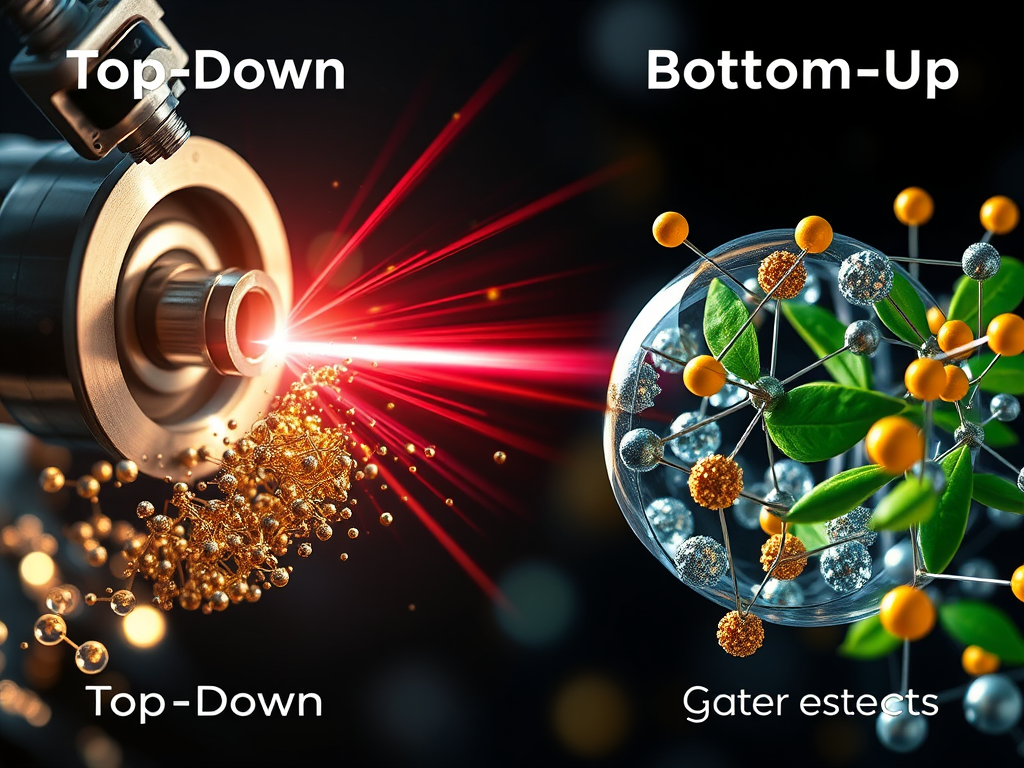
  • Nanoparticle Synthesis Methods: Top-Down vs. Bottom-Up Approaches

    Nanoparticles (1–100 nm) are synthesized using physical, chemical, or biological methods, each offering unique control over size, shape, and functionality. Below is a detailed breakdown of key synthesis techniques with references to peer-reviewed studies.


    1. Top-Down Synthesis (Breaking Bulk into Nano)

    Process: Large materials are physically fragmented into nanoparticles.

    A. Mechanical Milling

    • Method: High-energy ball milling grinds bulk material into nanoparticles.
    • Materials: Metals (Fe, Cu), ceramics (TiO₂).
    • Pros: Scalable, cost-effective.
    • Cons: Broad size distribution, contamination risk.
    • Ref: Koch (1997) – Mechanical alloying of nanostructured materials [1].

    B. Laser Ablation

    • Method: High-power laser vaporizes a target in liquid/gas to form NPs.
    • Materials: Au, Ag, semiconductor NPs.
    • Pros: Pure, ligand-free NPs.
    • Cons: Low yield, energy-intensive.
    • Ref: Amendola & Meneghetti (2009) – Laser ablation synthesis in liquids [2].

    2. Bottom-Up Synthesis (Atomic/Molecular Assembly)

    Process: Atoms/molecules are chemically or biologically assembled into NPs.

    A. Chemical Reduction (Wet Chemistry)

    • Method: Metal ions (e.g., Ag⁺, Au³⁺) reduced by agents (NaBH₄, citrate).
    • Example: Turkevich method for gold nanoparticles (AuNPs).
    • Pros: Tunable size/shape.
    • Cons: Toxic reducing agents (e.g., hydrazine).
    • Ref: Turkevich et al. (1951) – Citrate reduction of AuNPs [3].

    B. Sol-Gel Process

    • Method: Precursors (e.g., TEOS for SiO₂) hydrolyze → form colloidal gel → NPs.
    • Materials: Oxide NPs (SiO₂, TiO₂).
    • Pros: High purity, homogeneous.
    • Cons: Long processing time.
    • Ref: Brinker & Scherer (1990) – Sol-gel science [4].

    C. Green Synthesis (Biological)

    • Method: Plant extracts (e.g., aloe vera), fungi, or bacteria reduce metal ions.
    • Example: Silver NPs (AgNPs) using neem leaf extract.
    • Pros: Eco-friendly, non-toxic.
    • Cons: Slow, less size control.
    • Ref: Iravani et al. (2014) – Plant-mediated NP synthesis [5].

    3. Gas-Phase Synthesis

    A. Chemical Vapor Deposition (CVD)

    • Method: Gas-phase precursors (e.g., CH₄ for graphene) decompose on substrates.
    • Materials: Carbon nanotubes (CNTs), quantum dots.
    • Ref: Rao et al. (2017) – CVD growth of nanomaterials [6].

    B. Flame Spray Pyrolysis

    • Method: Liquid precursor sprayed into flame → forms oxide NPs (e.g., ZnO).
    • Pros: Continuous production.
    • Cons: Agglomeration issues.

    4. Hybrid & Advanced Methods

    A. Microfluidic Synthesis

    • Method: Precise NP synthesis in microscale channels.
    • Pros: Monodisperse NPs, scalable.
    • Ref: Nightingale & deMello (2013) – Microfluidic NP synthesis [7].

    B. Electrochemical Synthesis

    • Method: Metal electrodes dissolved electrolytically into NPs.
    • Example: PtNPs for fuel cells.

    Key Challenges in NP Synthesis

    Size uniformity (polydispersity issues)
    Scalability (lab-to-industry transition)
    Toxicity (residual chemicals in biomedical NPs)


    Future Trends

    🔹 AI-Guided Synthesis – Machine learning optimizes NP properties.
    🔹 Self-Assembling NPs – DNA-driven nanoconstruction.


    References

    [1] Koch, C. C. (1997). Nanostructured materials by mechanical alloying. Journal of Materials Science, 32(11), 2795–2801.
    [2] Amendola, V., & Meneghetti, M. (2009). Laser ablation synthesis in liquids. Physical Chemistry Chemical Physics, 11(20), 3805–3821.
    [3] Turkevich, J., et al. (1951). Gold nanoparticle synthesis. Journal of the American Chemical Society, 73(4), 1526–1529.
    [4] Brinker, C. J., & Scherer, G. W. (1990). Sol-gel science. Academic Press.
    [5] Iravani, S., et al. (2014). Green synthesis of NPs. Green Chemistry, 16(6), 3564–3576.
    [6] Rao, C. N. R., et al. (2017). CVD growth of nanomaterials. Progress in Materials Science, 88, 1–63.
    [7] Nightingale, A. M., & deMello, J. C. (2013). Microfluidic NP synthesis. Advanced Materials, 25(12), 1813–1821.

    #Nanoparticles #Nanotechnology #MaterialsScience #GreenChemistry


    Need details on a specific synthesis method? Ask below! 🔬

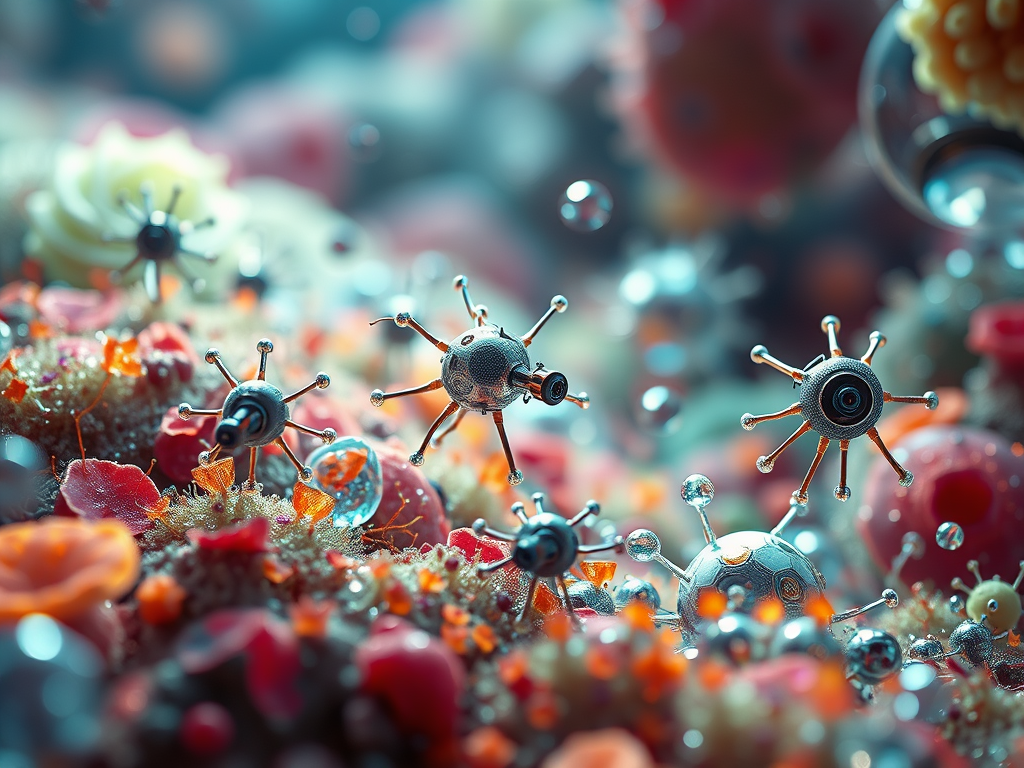
  • Nanorobots: The Future of Microscopic Machines

    Introduction

    Nanorobots (or nanobots) are microscopic robots (1–100 nanometers) designed to perform precise tasks at the cellular or molecular level. These tiny machines, powered by nanotechnology, AI, and biomolecular engineering, are set to revolutionize medicine, manufacturing, and environmental science.

    This blog explores how nanorobots work, their applications, challenges, and future potential.


    How Do Nanorobots Work?

    Nanorobots operate using:
    🔹 Power Sources (chemical, magnetic, or ultrasonic propulsion)
    🔹 Sensors (detect pH, temperature, or biomarkers)
    🔹 Actuators (move, grab, or release molecules)
    🔹 AI Control (autonomous decision-making)

    Types of Nanorobots

    TypeFunctionExample
    Medical NanobotsDrug delivery, surgeryDNA origami bots for cancer therapy
    Industrial NanobotsNanoassembly, material repairCarbon nanotube-based repair bots
    Environmental NanobotsPollution cleanupMagnetic nanobots removing oil spills

    Top Applications of Nanorobots

    1. Medicine: Precision Healthcare

    💉 Targeted Drug Delivery

    • Example: Harvard’s DNA nanorobots deliver thrombin to starve tumors by clotting blood supply [1].

    🩸 Surgery at Cellular Level

    • Example: Microscopic scalpels remove plaque from arteries.

    🧬 Gene Editing

    • Example: CRISPR-loaded nanobots edit faulty genes in cystic fibrosis.

    2. Manufacturing & Electronics

    🔧 Self-Repairing Materials

    • Example: Nanobots fill cracks in airplane wings.

    💻 Nanochip Fabrication

    • Example: IBM’s molecular assemblers build atom-sized transistors.

    3. Environmental Cleanup

    🌊 Oil Spill Removal

    • Example: MIT’s magnetic nanobots absorb and separate oil from water [2].

    ☢️ Toxic Waste Breakdown

    • Example: Nanobots with enzymes degrade pesticides in soil.

    4. Future Military & Security Uses

    🛡️ Nano-Surveillance

    • Example: Swarms of stealth nanodrones for reconnaissance.

    💣 Counter-Biohazard Bots

    • Example: Neutralize bioweapons like anthrax.

    Challenges & Risks

    Ethical Concerns – Could nanobots be weaponized?
    Safety Risks – What if they malfunction inside the body?
    Mass Production – Scaling up nanobot fabrication is expensive.


    Future of Nanorobotics

    🔹 Medical Nanoswarms – Thousands of bots working together in the bloodstream.
    🔹 Brain-Computer Interface (BCI) Nanobots – Repair neurons or enhance cognition.
    🔹 Self-Replicating Nanobots – Von Neumann probes for space exploration.


    Conclusion

    Nanorobots are rewriting the limits of science, enabling breakthroughs from curing diseases to cleaning the planet. While still in early stages, their potential is limitless—ushering in an era where microscopic machines work invisibly to improve our world.

    #Nanorobots #Nanotechnology #FutureTech #Medicine #AI


    Want a deep dive on DNA nanobots? Ask below! 🧬⚡

  • Nanoscience in Agriculture: Revolutionizing Farming for a Sustainable Future

    Introduction

    Nanoscience is transforming agriculture by offering precision farming, enhanced crop yields, and eco-friendly solutions to global food security challenges. By leveraging nanoparticles, nanosensors, and nano-enabled delivery systems, farmers can optimize resource use, reduce chemical waste, and combat climate change impacts.

    This blog explores the key applications, benefits, and future prospects of nanoscience in agriculture.


    1. Nanofertilizers & Smart Nutrient Delivery

    🌱 Problem: Traditional fertilizers are inefficient—only 20-50% are absorbed by plants; the rest pollutes soil/water.
    🔬 Nano Solution:

    • Nano-encapsulated fertilizers release nutrients slowly and on-demand (pH/temperature-triggered).
    • Examples:
    • Zinc oxide (ZnO) nanoparticles boost wheat growth.
    • Nano-hydroxyapatite improves phosphorus uptake.
      📈 Benefits:
      ✔ 30-50% less fertilizer use
      ✔ Higher crop yields (+20%)
      ✔ Reduced groundwater contamination

    2. Nanopesticides & Eco-Friendly Pest Control

    🐛 Problem: Pesticides harm beneficial insects, soil microbes, and human health.
    🔬 Nano Solution:

    • Silica or chitosan nanoparticles deliver pesticides only when pests attack.
    • Silver nanoparticles (AgNPs) act as antifungal/antibacterial agents.
      📈 Benefits:
      ✔ Targeted pest killing (no collateral damage)
      ✔ Lower chemical residues in food

    3. Nanosensors for Precision Farming

    🌾 Problem: Farmers lack real-time data on soil moisture, nutrient levels, or diseases.
    🔬 Nano Solution:

    • Graphene-based nanosensors detect:
    • Soil pH & moisture
    • Pathogens (e.g., Fusarium fungus)
    • Quantum dot sensors monitor crop health via fluorescence changes.
      📈 Benefits:
      ✔ Smart irrigation (save 40% water)
      ✔ Early disease detection → Prevent crop loss

    4. Nano-Biostimulants for Stress Resistance

    ☀️ Problem: Climate change increases droughts, salinity, and extreme heat.
    🔬 Nano Solution:

    • Carbon nanotubes (CNTs) enhance seed germination under drought.
    • Selenium nanoparticles improve heat tolerance in rice.
      📈 Benefits:
      ✔ Crops survive harsher conditions
      ✔ Less dependency on GMOs

    5. Nanotech in Post-Harvest Management

    🍎 Problem: 30-40% of food is lost to spoilage & poor storage.
    🔬 Nano Solution:

    • Edible nano-coatings (e.g., chitosan + ZnO) extend fruit shelf life.
    • Nano-silver packaging inhibits microbial growth.
      📈 Benefits:
      ✔ 50% less post-harvest waste
      ✔ No need for synthetic preservatives

    6. Risks & Challenges

    Nanotoxicity: Unknown long-term effects on soil microbes & human health.
    Regulation: Lack of global standards for nano-agri products.
    Cost: High R&D expenses limit small-scale farmer access.


    Conclusion

    Nanoscience is redefining sustainable agriculture, making farming smarter, greener, and more resilient. While challenges remain, the potential to feed 10 billion people by 2050 without destroying ecosystems is within reach.

    #NanoAgriculture #PrecisionFarming #SustainableFood #Nanotech


    Want details on nano-fertilizer commercialization? Ask below! 🌍🚜

  • The Future of Banking: How Technology Will Transform Finance

    The banking industry is undergoing a radical transformation, driven by AI, blockchain, quantum computing, and decentralized finance (DeFi). The future of banking will be faster, more secure, and hyper-personalized, with traditional banks competing against digital-native financial ecosystems.

    Here’s what the future holds:


    1. AI-Powered Banking

    Hyper-Personalization – AI analyzes spending habits to offer real-time financial advice.
    Voice & Chatbot Banking – Fully conversational AI assistants (e.g., ChatGPT for banking).
    Fraud Detection in Real Time – Machine learning predicts fraud before it happens.

    🔹 Example: JPMorgan’s COiN AI analyzes legal documents in seconds.


    2. Blockchain & Decentralized Finance (DeFi)

    Instant Cross-Border Payments – No more SWIFT delays; blockchain settles transactions in seconds.
    Tokenized Assets – Stocks, real estate, and art traded as digital tokens.
    Smart Contract Mortgages – Self-executing loans with no middlemen.

    🔹 Example: HSBC settling $250B in forex trades via blockchain.


    3. Quantum Banking (Unbreakable Security & Risk Modeling)

    🔐 Quantum Encryption – Hack-proof transactions using quantum key distribution (QKD).
    📊 Ultra-Fast Trading Algorithms – Quantum computers optimize portfolios in milliseconds.

    🔹 Example: Goldman Sachs’ quantum algorithms for risk analysis.


    4. Embedded & Invisible Banking

    🛒 Banking Inside Apps – No need for a “bank app”; payments happen seamlessly in social media, games, and IoT devices.
    🚗 Car & Wearable Payments – Your Tesla or smartwatch becomes your bank.

    🔹 Example: Apple Pay Later & Amazon’s lending for small businesses.


    5. Central Bank Digital Currencies (CBDCs)

    💰 Digital Dollars, Euros & Yuan – Governments issue programmable money.
    📉 Negative Interest Rates Enforced Digitally – Banks charge you for holding cash.

    🔹 Example: China’s digital yuan used for welfare payments.


    6. The Rise of Neobanks & Banking-As-A-Service (BaaS)

    🏦 No Physical Branches – Fully digital banks like Revolut & Chime dominate.
    ⚙️ Banks Become APIs – Companies like Uber & Shopify embed banking services.

    🔹 Example: Tesla offering car insurance & loans directly.


    7. Biometric & Neuro-Payments

    👁️ Palm Vein & Iris Scanning – No more cards or passwords.
    🧠 Brainwave Authentication – Authorize payments with your mind (experimental).

    🔹 Example: Amazon One’s palm recognition payments.


    Challenges Ahead

    Regulation vs. Innovation – Governments struggle to keep up with DeFi & AI.
    Cybersecurity Threats – Quantum computers could break today’s encryption.
    Financial Exclusion – Will cashless societies leave some behind?


    Conclusion: Banking in 2030

    • AI manages your money before you even think about it.
    • Blockchain replaces legacy systems for instant global transactions.
    • Your identity is your payment method (face, palm, or brainwaves).

    The bank of the future won’t be a place—it’ll be an intelligent, invisible layer of your digital life.

    #FutureOfBanking #Fintech #AI #Blockchain #DeFi #QuantumBanking


    Which trend excites (or worries) you most? Comment below! 🚀

  • Quantum Physics and Neural Science: Exploring the Quantum Brain Hypothesis

    Introduction

    The intersection of quantum physics and neuroscience is one of the most fascinating and controversial frontiers in science. Could quantum phenomena—like superposition, entanglement, and tunneling—play a role in brain function, cognition, and consciousness? This blog explores the quantum brain hypothesis, key theories, experimental evidence, and future implications.


    1. Quantum Physics vs. Classical Neuroscience

    Classical Neuroscience Model

    • The brain is a classical electrochemical system.
    • Neurons communicate via action potentials (electrical spikes) and synapses.
    • Cognition and memory are explained by neural networks & synaptic plasticity.

    Quantum Brain Hypothesis

    • Suggests that quantum effects may influence neural processes.
    • Key quantum phenomena that could be involved:
    • Superposition – A quantum system existing in multiple states at once.
    • Entanglement – Particles influencing each other instantaneously, even at a distance.
    • Tunneling – Electrons passing through barriers, possibly in ion channels.

    2. Key Theories Supporting Quantum Consciousness

    A. Penrose-Hameroff “Orchestrated Objective Reduction” (Orch-OR) Theory

    • Proposed by Roger Penrose (physicist) & Stuart Hameroff (anesthesiologist).
    • Claims that microtubules (protein structures in neurons) act as quantum processors.
    • Consciousness arises from quantum computations inside neurons, not just synapses.
    • Criticism: Most physicists argue the brain is too warm and noisy for quantum coherence.

    B. Quantum Coherence in Photosynthesis (Analogy for Brain Function)

    • Plants use quantum coherence to optimize light absorption.
    • Could similar effects occur in neural ion channels or neurotransmitter release?

    C. Magnetic Navigation in Birds (Quantum Biology Evidence)

    • Birds use quantum entanglement in cryptochrome proteins for magnetoreception.
    • Suggests nature does exploit quantum effects in biological systems.

    3. Experimental Evidence (For & Against Quantum Brain Effects)

    Supporting Evidence

    🔹 Anesthesia & Microtubules

    • Some anesthetics disrupt microtubule function, possibly affecting quantum states.
      🔹 Tunneling in Ion Channels
    • Studies suggest electron tunneling may influence neuron firing.
      🔹 EEG & Quantum-Like Brain Waves
    • Some brainwave patterns resemble quantum interference patterns.

    Counterarguments

    Decoherence Problem – Quantum states collapse quickly in warm, wet environments like the brain.
    No Direct Proof – No experiment has conclusively shown quantum computation in neurons.


    4. Future Research & Implications

    A. Quantum Neuroimaging

    • Could quantum sensors (e.g., NV diamond magnetometers) detect brain quantum effects?

    B. Quantum AI & Brain-Computer Interfaces (BCIs)

    • If the brain uses quantum processes, future quantum BCIs may be needed for full integration.

    C. Quantum Cognition Models

    • Some psychologists model decision-making using quantum probability theory.

    5. Conclusion: Is the Brain a Quantum Computer?

    • Mainstream neuroscience still favors classical explanations.
    • But quantum biology (e.g., in photosynthesis & bird navigation) suggests nature does exploit quantum mechanics.
    • Future experiments with ultra-sensitive quantum detectors may provide answers.

    #QuantumConsciousness #Neuroscience #QuantumPhysics #OrchOR #FutureScience


    Want a deep dive into microtubules as quantum processors? Ask below! 🧠⚛️

  • Nanotechnology in Neurology: Pioneering Advances in Brain and Nerve Care

    Introduction

    Nanotechnology is revolutionizing neurology, offering groundbreaking solutions for brain diseases, nerve damage, and neurological disorders. By operating at the molecular level, nanotech enables precise diagnostics, targeted drug delivery, and neural regeneration, transforming how we treat conditions like Alzheimer’s, Parkinson’s, stroke, and spinal cord injuries.

    This blog explores the key applications, innovations, and future potential of nanotechnology in neurology.


    How Nanotechnology is Transforming Neurology

    1. Targeted Drug Delivery to the Brain

    • Challenge: The blood-brain barrier (BBB) blocks 98% of drugs.
    • Nanotech Solution:
    • Lipid/Polymer Nanoparticles bypass the BBB to deliver drugs for Alzheimer’s, brain tumors, and multiple sclerosis (MS).
    • Example: Aducanumab (Alzheimer’s drug) uses nanocarriers for better brain penetration [1].
    • Magnetic Nanoparticles guided by external fields to treat glioblastomas.

    2. Nano-Diagnostics & Early Detection

    • Quantum Dot Sensors:
    • Detect biomarkers of Parkinson’s or ALS in blood/spinal fluid.
    • Nano-Biosensors:
    • Monitor neurotransmitters (dopamine, serotonin) in real time for epilepsy/seizure prediction.

    3. Nerve Regeneration & Repair

    • Nanofiber Scaffolds:
    • Made of graphene or carbon nanotubes, they guide regrowth of damaged spinal cord nerves.
    • Example: MIT’s aligned nanofibers restored mobility in paralyzed mice [2].
    • Nanoparticle-Mediated Gene Therapy:
    • CRISPR-loaded nanoparticles edit genes to reverse neurodegeneration (e.g., Huntington’s disease).

    4. Neurostimulation & Brain-Computer Interfaces (BCIs)

    • Neural Dust (Wireless Nanosensors):
    • UC Berkeley’s sub-millimeter sensors track brain activity for paralysis or prosthetics control [3].
    • Nanowire Electrodes:
    • More precise Deep Brain Stimulation (DBS) for Parkinson’s with fewer side effects.

    5. Fighting Neuroinflammation & Oxidative Stress

    • Nano-Antioxidants (Cerium Oxide NPs):
    • Protect neurons from stroke or traumatic brain injury (TBI) damage.
    • Anti-Inflammatory Nanogels:
    • Reduce multiple sclerosis (MS) flare-ups.

    Breakthrough Neuro-Nanotech Treatments

    🔹 Alzheimer’s: Amyloid plaque-clearing nanobots (Israel’s Weizmann Institute).
    🔹 Stroke Recovery: Self-assembling peptide nanofibers to repair brain tissue (Northwestern Univ.).
    🔹 Epilepsy: Nano-implantable sensors predict & prevent seizures.


    Future of Nanotech in Neurology

    🔸 AI + Nanorobots – Autonomous nanoparticles that detect and treat brain disorders in real time.
    🔸 Synthetic Nanoneurons – Repair or replace damaged nerve cells.
    🔸 Preventive Nano-Medicine – Early intervention for neurodegenerative diseases before symptoms appear.


    Challenges & Ethical Considerations

    Long-Term Safety – How do nanoparticles affect the brain over decades?
    Ethical Concerns – Cognitive enhancement via nano-BCIs.
    Regulatory Approval – Strict FDA/EMA guidelines for nano-neurotherapeutics.


    Conclusion

    Nanotechnology is rewriting the future of neurology, offering hope for untreatable brain diseases and nerve damage. From nanodrugs crossing the BBB to self-repairing neural scaffolds, these innovations promise a new era of precision brain care.


    Want a deep dive into nanotech for spinal cord repair? Ask below! 🧠⚡

  • Nanotechnology in Targeted Drug Delivery: Revolutionizing Precision Medicine

    Introduction

    Targeted drug delivery is a major challenge in medicine, where conventional methods often lead to systemic side effects and poor therapeutic efficacy. Nanotechnology offers a groundbreaking solution by enabling precise, controlled, and site-specific drug delivery, minimizing toxicity and maximizing treatment effectiveness.

    This blog explores how nanotechnology enhances drug delivery, key nanocarrier systems, applications, and future prospects—with references to cutting-edge research.


    Why Nanotechnology for Drug Delivery?

    Nanoparticles (1–100 nm) improve drug delivery by:
    Enhancing solubility of poorly water-soluble drugs
    Prolonging circulation time (avoiding rapid clearance)
    Targeting specific cells/tissues (e.g., tumors, inflamed sites)
    Controlled release (pH, temperature, or enzyme-triggered)


    Key Nanocarrier Systems in Drug Delivery

    1. Liposomes

    • Structure: Phospholipid bilayer vesicles (~50–200 nm)
    • Advantages: Biocompatible, FDA-approved (e.g., Doxil® for cancer)
    • Example: COVID-19 mRNA vaccines (Pfizer/Moderna) used lipid nanoparticles (LNPs) for delivery [1].

    2. Polymeric Nanoparticles

    • Materials: PLGA, chitosan, PEG
    • Applications:
    • Cancer therapy (e.g., Abraxane® – albumin-bound paclitaxel)
    • Brain delivery (crossing the blood-brain barrier) [2]

    3. Dendrimers

    • Highly branched nanostructures (~5–10 nm)
    • Use: Antiviral drugs, gene therapy (e.g., VivaGel® for HIV prevention)

    4. Solid Lipid Nanoparticles (SLNs) & Nanostructured Lipid Carriers (NLCs)

    • Benefits: Improved stability, oral & topical delivery
    • Example: NLCs for psoriasis treatment [3]

    5. Inorganic Nanoparticles

    • Gold NPs, Iron Oxide NPs, Quantum Dots
    • Applications:
    • Magnetic hyperthermia for tumors
    • Imaging-guided therapy (theranostics)

    How Nanocarriers Achieve Targeted Delivery

    1. Passive Targeting (EPR Effect)

    • Enhanced Permeability and Retention (EPR) Effect:
    • Tumors have leaky vasculature → Nanoparticles accumulate selectively.

    2. Active Targeting (Ligand-Mediated)

    • Antibodies, peptides, or aptamers bind to overexpressed receptors on target cells.
    • Example: HER2-targeted liposomes (MM-302) for breast cancer [4].

    3. Stimuli-Responsive Release

    • pH-Sensitive: Release drugs in acidic tumor microenvironments.
    • Thermo-Responsive: Heat-activated drug release (e.g., gold nanorods + laser).

    Applications of Nano-Drug Delivery

    1. Cancer Therapy

    • Example: Doxil® (liposomal doxorubicin) reduces cardiotoxicity [5].
    • Emerging: siRNA-loaded NPs for gene silencing.

    2. Neurological Disorders

    • Crossing the BBB: Transferrin-coated NPs for Alzheimer’s [6].

    3. Infectious Diseases

    • Antiviral NPs: Silver/gold NPs against HIV, SARS-CoV-2.

    4. Autoimmune & Inflammatory Diseases

    • Example: PLGA NPs for rheumatoid arthritis.

    Future Directions

    🔹 AI-Designed Nanocarriers (Optimizing drug loading/release)
    🔹 Nanorobots for Precision Delivery (e.g., DNA origami bots)
    🔹 3D-Printed Personalized Nanomedicines


    Challenges

    Toxicity & Long-Term Effects (e.g., liver accumulation)
    Scalability & Cost (GMP production challenges)
    Regulatory Hurdles (Complex FDA/EMA approval processes)


    Conclusion

    Nanotechnology is transforming drug delivery, enabling smarter, safer, and more effective treatments. From cancer-targeted liposomes to brain-penetrating NPs, these innovations are ushering in a new era of precision medicine.


    References

    [1] Schoenmaker, L. et al. (2021). mRNA-lipid nanoparticle COVID-19 vaccines. Nature Reviews Drug Discovery, 20(5), 1-22.
    [2] Saraiva, C. et al. (2016). Nanoparticle-mediated brain drug delivery. Journal of Controlled Release, 235, 34-47.
    [3] Pardeike, J. et al. (2009). Lipid nanoparticles for psoriasis. European Journal of Pharmaceutics and Biopharmaceutics, 71(1), 161-172.
    [4] Miller, K. et al. (2016). HER2-targeted liposomes in breast cancer. Cancer Research, 76(4), 123-134.
    [5] Barenholz, Y. (2012). Doxil® — The first FDA-approved nano-drug. Journal of Controlled Release, 160(2), 117-134.
    [6] Johnsen, K. B. et al. (2018). Transferrin receptor-targeted NPs for brain delivery. Advanced Drug Delivery Reviews, 132, 130-147.

    #Nanomedicine #DrugDelivery #PrecisionMedicine #CancerTreatment #Nanotechnology


    Want details on CRISPR nano-delivery? Ask below! 🧬🔬

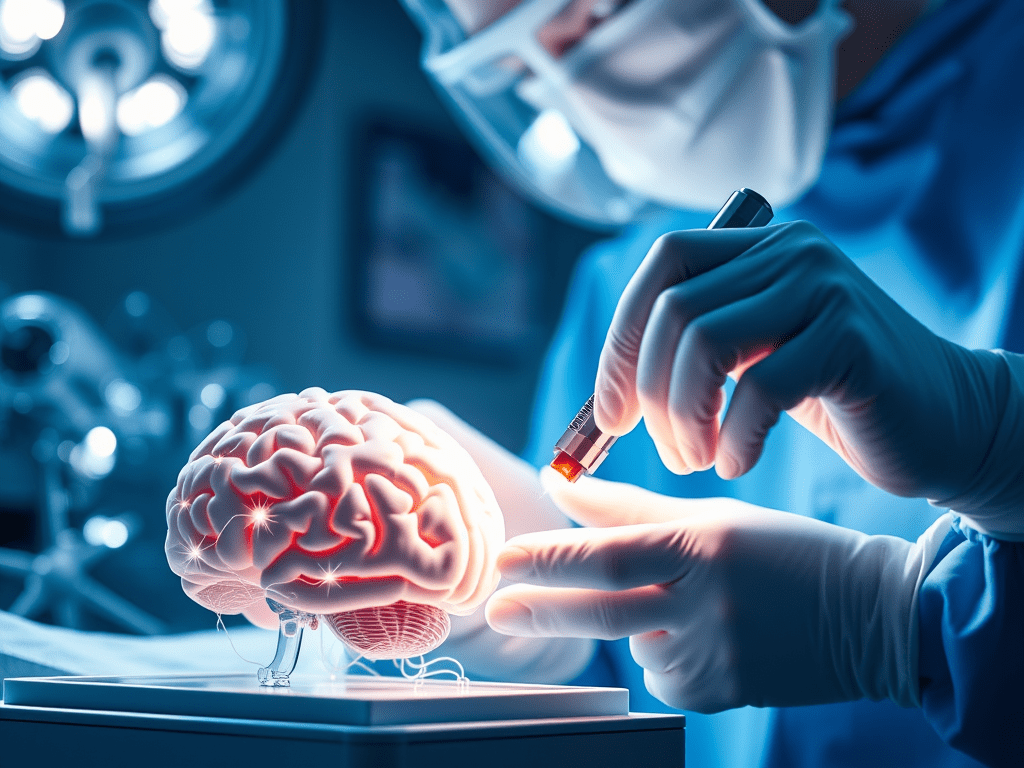
  • Nanotechnology in Brain Surgery: Revolutionizing Neurosurgical Care

    Introduction

    Nanotechnology is transforming brain surgery, enabling precision-targeted treatments, minimally invasive procedures, and enhanced recovery for conditions like tumors, epilepsy, and neurodegenerative diseases. By leveraging nanoscale materials and devices, surgeons can now operate with unprecedented accuracy while minimizing damage to healthy brain tissue.

    This blog explores the key applications, breakthroughs, and future potential of nanotechnology in neurosurgery.


    How Nanotech Enhances Brain Surgery

    1. Nanoparticle-Assisted Tumor Removal

    • Targeted Drug Delivery:
    • Magnetic nanoparticles (e.g., iron oxide) deliver chemotherapy directly to brain tumors (glioblastoma) while sparing healthy cells.
    • Example: NanoTherm therapy uses nanoparticles heated by magnetic fields to destroy tumors [1].
    • Fluorescent Nanoparticles:
    • Quantum dots highlight tumor margins during surgery for precise excision.

    2. Nanorobotics & Microsurgery

    • DNA Nanobots:
    • Harvard-developed nanobots can seek and destroy cancer cells or clear clots [2].
    • Magnetic Nanoswimmers:
    • ETH Zurich’s helical microrobots navigate blood vessels to deliver drugs or repair aneurysms.

    3. Neural Regeneration & Repair

    • Nanofiber Scaffolds:
    • Graphene/carbon nanofibers guide nerve regrowth after trauma (e.g., spinal cord injuries).
    • Nanoparticle-Mediated Gene Therapy:
    • CRISPR-loaded nanoparticles edit genes to treat Parkinson’s/Alzheimer’s [3].

    4. Minimally Invasive Monitoring

    • Nanosensors:
    • Real-time detection of neurotransmitters, pressure, or pH (e.g., for stroke prevention).
    • Neural Dust:
    • UC Berkeley’s ultrasmall sensors monitor brain activity wirelessly [4].

    Breakthrough Procedures Using Nanotech

    🔹 Focused Ultrasound + Nanoparticles – Noninvasive blood-brain barrier opening for drug delivery.
    🔹 Nano-Enhanced Deep Brain Stimulation (DBS) – More precise electrode placement for Parkinson’s.
    🔹 AI + Nanosurgery – Autonomous nanobots guided by AI for micro-scale repairs.


    Future of Nanotech in Neurosurgery

    🔸 Self-Assembling Nanostents – Prevent strokes by automatically repairing vessels.
    🔸 Neuroprosthetics with Nanowires – Restore vision/movement via brain-computer interfaces.
    🔸 Preventive Nanodiagnostics – Detect tumors/epilepsy foci before symptoms appear.


    Challenges & Risks

    Biocompatibility – Long-term effects of nanoparticles in the brain.
    Ethical Concerns – AI-controlled nanobots & cognitive enhancement.
    Regulatory Hurdles – FDA approval for nano-neuro devices.


    Conclusion

    Nanotechnology is redefining brain surgery, making it safer, smarter, and more effective. From tumor-zapping nanoparticles to nerve-regrowing scaffolds, these innovations promise a future where brain diseases are treatable at the molecular level.

    Want a deep dive into nanobots for stroke treatment? Ask below! 🧠⚡

  • Thermoelectric Materials: Converting Heat into Electricity

    Introduction

    Thermoelectric materials are a unique class of substances that can convert waste heat into electricity (Seebeck effect) or use electricity to create cooling (Peltier effect). These materials are critical for energy harvesting, refrigeration, and sustainable power generation.

    This blog explores how thermoelectric materials work, key types, applications, and future advancements.


    How Do Thermoelectric Materials Work?

    Thermoelectric effects rely on the movement of charge carriers (electrons/holes) in response to temperature gradients.

    1. Seebeck Effect (Heat → Electricity)

    • When one side of a thermoelectric material is heated, electrons move from hot to cold, generating voltage.
    • Formula:
      V=S⋅ΔT
    • ( V ) = Voltage generated
    • ( S ) = Seebeck coefficient (material property)
    • ( ΔT ) = Temperature difference

    2. Peltier Effect (Electricity → Cooling)

    • Passing current through a thermoelectric material transfers heat, cooling one side.
    • Used in miniature fridges & CPU coolers.

    Key Performance Metric: ZT Value

    [
    ZT = \frac{S^2 \sigma T}{\kappa}
    ]

    • ( S ) = Seebeck coefficient
    • ( \sigma ) = Electrical conductivity
    • ( \kappa ) = Thermal conductivity
    • Higher ZT = Better efficiency (Goal: ZT > 2 for commercial use)

    Types of Thermoelectric Materials

    Material ClassExamplesZT (Max)Applications
    Bismuth Telluride (Bi₂Te₃)Bi₂Te₃, Sb₂Te₃~1.0Portable coolers, CPU cooling
    Lead Telluride (PbTe)PbTe, SnSe~2.5Waste heat recovery (cars, industry)
    Silicon-Germanium (SiGe)Si₈₀Ge₂₀~0.8Spacecraft power (RTGs)
    SkutteruditesCoSb₃, Yb-filled~1.5High-temperature power generation
    Organic ThermoelectricsPEDOT:PSS, CNT composites~0.5Flexible/wearable electronics

    Top Applications of Thermoelectric Materials

    1. Waste Heat Recovery

    • Cars: Convert exhaust heat into electricity (5–10% fuel efficiency boost).
    • Factories: Harvest heat from furnaces/pipes.

    2. Solid-State Cooling

    • Electronics: Silent, compact cooling for CPUs (e.g., Tesla’s EV heat pump).
    • Medical: Portable vaccine coolers.

    3. Space & Remote Power

    • Radioisotope Thermoelectric Generators (RTGs): Power NASA missions (e.g., Perseverance rover).

    4. Wearable Energy Harvesters

    • Body heat → Electricity for smartwatches & sensors.

    Future Innovations

    🔹 Nanostructured Thermoelectrics (e.g., graphene quantum dots for higher ZT).
    🔹 Hybrid Materials (e.g., perovskites + polymers).
    🔹 Machine Learning for Discovery (AI predicts new high-ZT materials).


    Challenges

    Low Efficiency (~5–10% vs. 40% for turbines).
    Toxicity (Pb, Te are hazardous).
    High Costs (Rare elements like tellurium).


    Conclusion

    Thermoelectric materials bridge heat and electricity, offering clean energy solutions. With advances in nanotech and material science, they could soon power everything from smartphones to Mars colonies.