• The dark matter un-revel truths

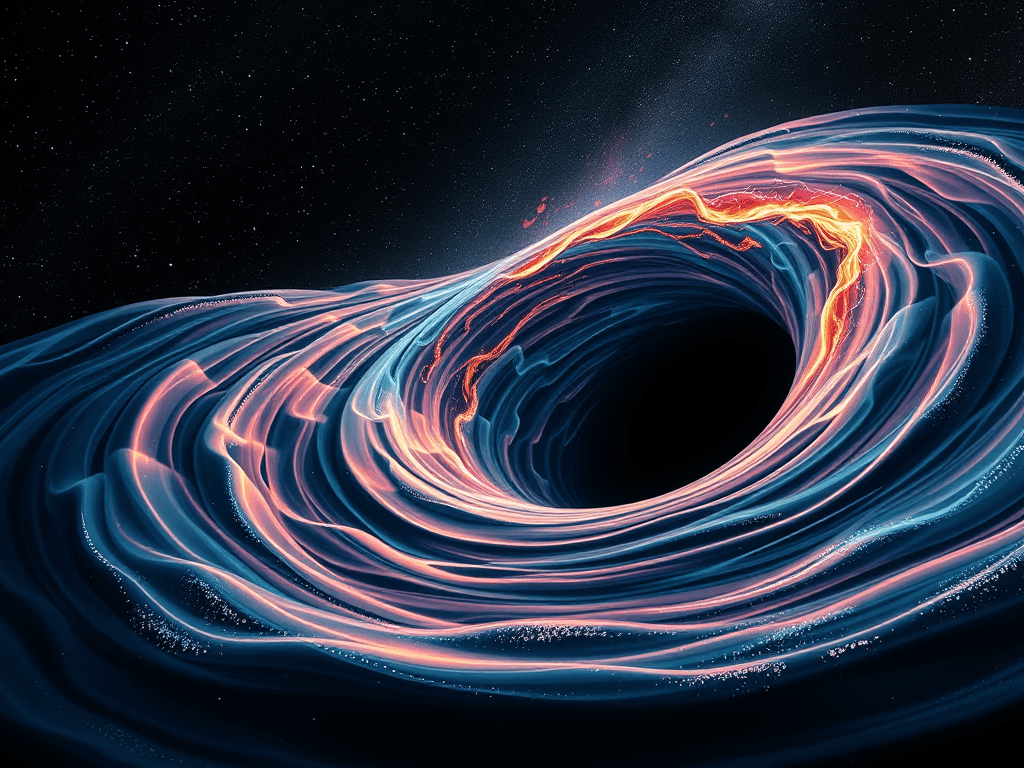
    🌌 What Is Dark Matter?

    “Imagine a ghost you can’t see, hear, or touch — but you know it’s there because it moves things around.”
    That’s dark matter — the invisible scaffolding of the universe.


    👻 You Can’t See It… But It’s Everywhere

    Dark matter is not made of atoms, so it:

    • Doesn’t glow like stars ☀️
    • Doesn’t reflect light like planets 🌍
    • Doesn’t block light like clouds ☁️

    Yet, scientists are 100% sure it exists. Why?


    🚀 The Clues That Gave It Away

    1. Galaxies Spin Too Fast

    If only visible matter existed, galaxies would fall apart. But they don’t.
    Why? There’s a gravitational glue—invisible matter holding them together.

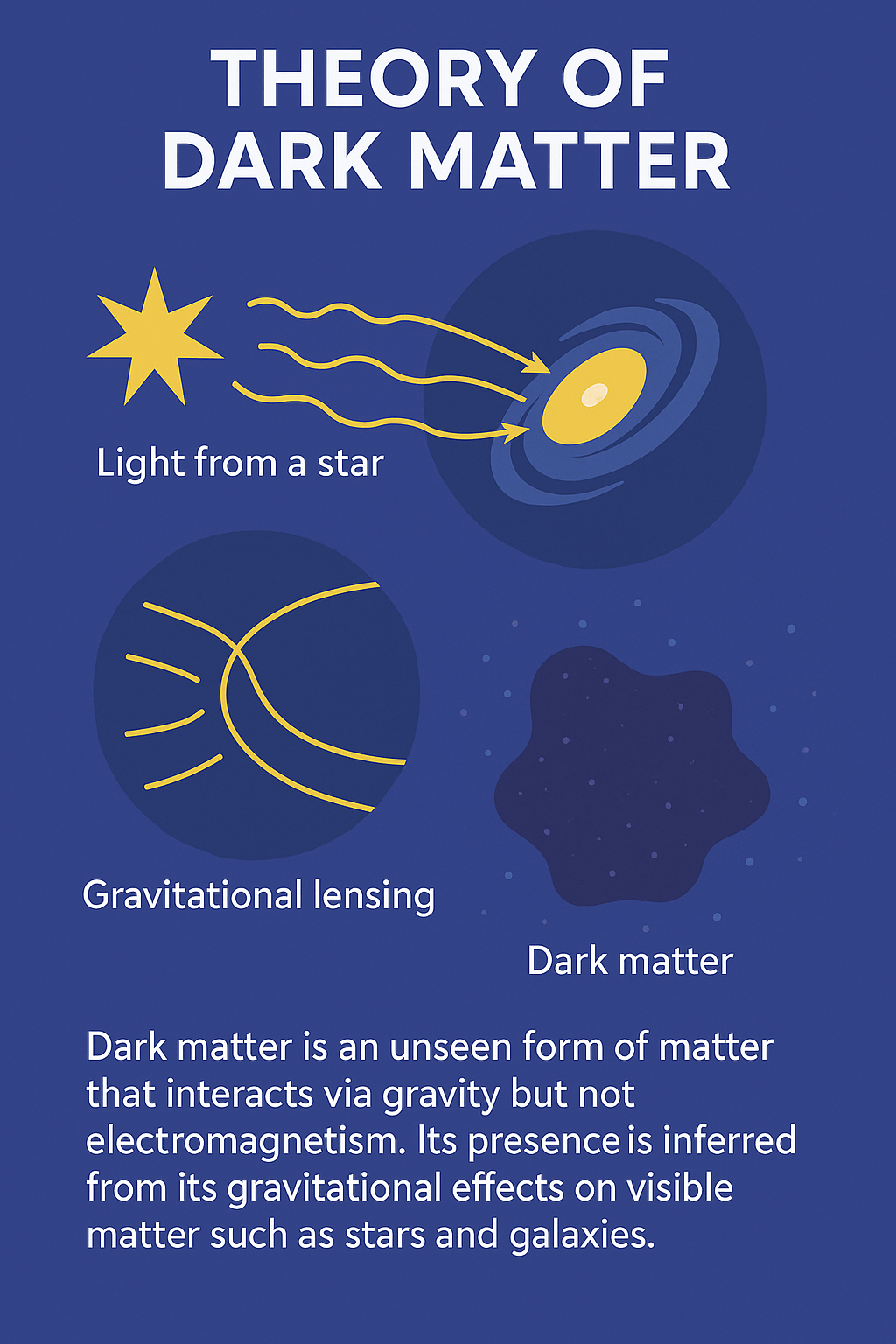
    2. Gravitational Lensing

    Sometimes, light from distant galaxies bends in weird ways.
    This only happens if there’s extra mass warping space — even though we can’t see it.

    3. Cosmic Fingerprints

    The afterglow of the Big Bang (called the CMB) shows patterns that match a universe full of hidden matter.


    🧪 So What IS Dark Matter?

    We don’t know exactly.
    But it might be made of WIMPs (Weakly Interacting Massive Particles) or axions — exotic particles that don’t interact with light, only gravity.

    You can think of dark matter as the invisible bones of the cosmos — the structure that holds galaxies together.


    🧠 Why It’s Mind-Blowing

    • There’s more of it than everything we can see!
      → About 27% of the universe is dark matter
      → Only 5% is normal matter (you, me, stars, planets)
      → The rest? That’s something even weirder: dark energy

    🕵️‍♂️ The Universe’s Greatest Mystery

    Despite knowing it shapes galaxies and the cosmos…

    We have never seen a single dark matter particle. 😮

    It’s the biggest cosmic detective story — and we’re still chasing the clues.


  • 🔦 Understanding Light, Gravitational Lensing & Dark Matter

    Most wonderful Properties of Light


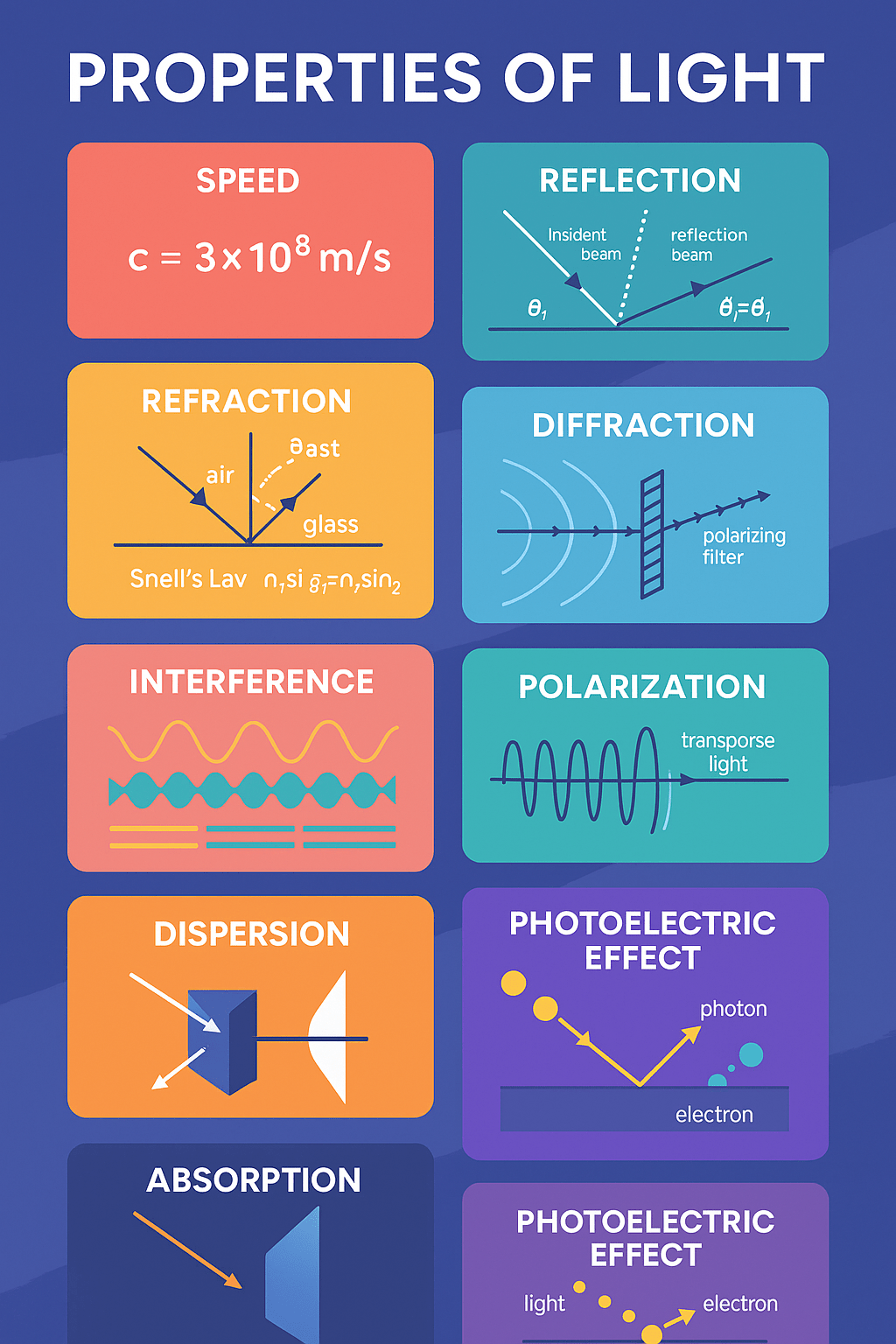
    🌈 1. Properties of Light

    Light is a form of energy that travels as an electromagnetic wave but also behaves like particles (photons). Here are its key properties:

    ✔ Speed

    • In vacuum: 3 × 10⁸ m/s
    • Slows down in water, glass, etc.

    ✔ Reflection

    • Bouncing of light off a surface.
    • Law: Angle of incidence = angle of reflection
    • Example: Mirrors.

    ✔ Refraction

    • Bending of light when it passes from one medium to another.
    • Caused by a change in light’s speed.
    • Example: A straw looks bent in water.

    ✔ Diffraction

    • Light spreads out when it passes through a narrow slit.
    • More noticeable with small slits or obstacles.

    ✔ Interference

    • Overlapping light waves produce bright and dark patterns.
    • Seen in thin films like soap bubbles.

    ✔ Polarization

    • Filters light to vibrate in one direction only.
    • Used in sunglasses and LCD screens.

    ✔ Dispersion

    • Splitting of white light into its color components (spectrum).
    • Example: Rainbow, prism.

    ✔ Absorption & Transmission

    • Materials may block, absorb, or allow light.
      • Transparent: light passes through (glass)
      • Translucent: partial transmission (frosted glass)
      • Opaque: blocks light (wood)

    ✔ Photoelectric Effect

    • Light hits a metal → ejects electrons.
    • Shows that light behaves as particles (photons).
    • Einstein won the Nobel Prize for this!

    🔄 2. Can We Bend Light?

    Yes, light can change direction under certain conditions — though not like bending a wire!

    🌊 A. Refraction

    • Most common method.
    • Light bends when entering a medium with different density.
    • Applications: Lenses, eyeglasses, magnifying glasses.

    🌠 B. Gravitational Bending

    • Predicted by Einstein.
    • Massive objects bend spacetime, and light follows the curve.
    • Known as gravitational lensing (see below).

    🔍 C. Prisms and Lenses

    • Prisms split and bend light (dispersion).
    • Lenses focus or spread light.

    🌅 D. Atmospheric Bending

    • Light bends due to air layers of different temperatures.
    • Examples: Mirages, flattened Sun at sunset.

    🌌 3. Gravitational Lensing

    Gravitational lensing is a powerful effect of Einstein’s General Relativity.

    🌀 What Happens?

    When light from a distant galaxy passes near a massive object (like a black hole or galaxy cluster), the object’s gravity bends the light.

    • Acts like a cosmic magnifying glass.
    • Helps us observe distant galaxies or objects hidden behind other ones.

    🧭 Types of Gravitational Lensing:

    TypeDescriptionUse Case
    Strong LensingCreates arcs, rings (Einstein rings), multiple imagesSeen in Hubble images
    Weak LensingSlight distortion in galaxy shapesUsed in dark matter mapping
    MicrolensingTemporary brightening as a star passes in front of anotherDetects exoplanets

    🌠 Why It’s Important:

    • Confirms Einstein’s theory.
    • Maps dark matter (which doesn’t emit light).
    • Reveals early and distant galaxies.

    🕳️ 4. What is Dark Matter?

    Dark matter is an invisible form of matter that makes up about 27% of the universe.

    🕵️‍♂️ We Can’t See It, But We Know It’s There!

    Evidence for dark matter comes from:

    🔄 Galaxy Rotation

    • Galaxies rotate too fast to be held together by visible matter alone.
    • Invisible “extra mass” is holding them in.

    🔭 Gravitational Lensing

    • Light bends more than expected → hidden mass is present.

    🌌 Structure Formation

    • The way galaxies formed after the Big Bang needs dark matter to explain it.

    🤔 What Could It Be?

    Dark matter is probably made of unknown particles like:

    • WIMPs (Weakly Interacting Massive Particles)
    • Axions
    • Sterile Neutrinos

    It is not:

    • Normal atoms
    • Black holes
    • Ordinary gas
    • Antimatter

    📊 Composition of the Universe:

    ComponentPercentage
    Dark Energy68%
    Dark Matter27%
    Normal Matter5%

    🧠 Summary

    ConceptWhat It Means
    LightElectromagnetic wave and particle
    Bending of LightThrough refraction, lenses, gravity
    Gravitational LensingGravity bending light → space telescope effect
    Dark MatterInvisible matter that shapes the universe

  • 🚀 SpaceX to Launch 9th Starship Test Flight After Previous Failures Sent Debris Falling to Earth

    By News Todays 1 Staff | May 27, 2025

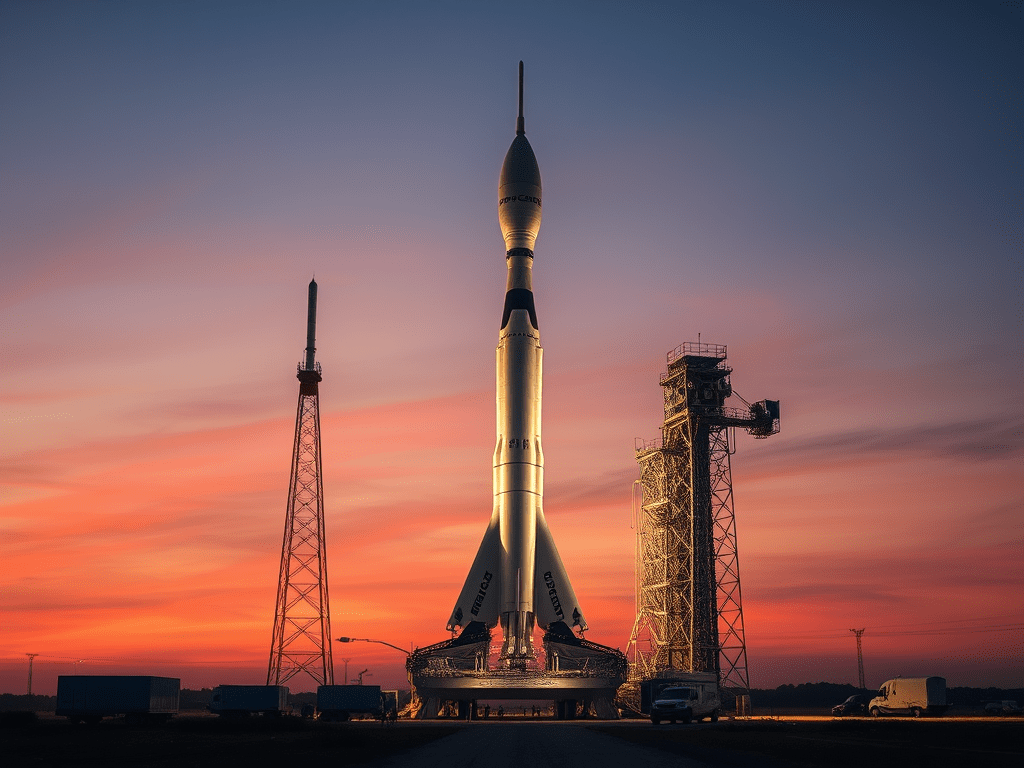
    BOCA CHICA, TEXAS — SpaceX is gearing up for the highly anticipated ninth test flight of its next-generation Starship rocket today, following two previous test missions that ended in failure and rained debris back to Earth.

    Scheduled for liftoff from SpaceX’s Starbase in Boca Chica at 7:30 PM ET (5:00 AM IST, May 28), the flight comes with heightened scrutiny. Earlier test flights—Flight 7 and Flight 8—both suffered catastrophic failures. Debris from those launches fell over regions including Florida and the Caribbean, raising safety and environmental concerns.

    🔍 FAA Approves, Expands Safety Measures

    In the wake of those incidents, the Federal Aviation Administration (FAA) has granted clearance for this mission but with stricter safety protocols. The debris hazard zone has been expanded from 885 to 1,600 nautical miles, and SpaceX has been required to carry $500 million in liability insurance.

    The FAA says SpaceX has addressed the key issues identified in earlier flights, particularly a “flash in the rocket engines” during Flight 8, which led to a mid-air breakup of the vehicle.

    ♻️ Reusability Milestone

    What makes Flight 9 especially historic is that SpaceX will attempt, for the first time, to reuse a Super Heavy booster—a key step toward the company’s long-term goal of full reusability.

    The mission plan includes:

    • Deployment of 8 Starlink satellite simulators
    • A mid-flight engine relight test of the Starship upper stage
    • A controlled splashdown of the booster in the Gulf of Mexico
    • A targeted descent of the Starship upper stage into the Indian Ocean

    🌐 How to Watch

    SpaceX will stream the launch live on its website and social media channels, with coverage beginning approximately 30 minutes before launch.

    🪐 What’s at Stake

    This test is pivotal not just for the company’s credibility after recent setbacks, but also for its long-term vision: supporting human missions to the Moon, Mars, and beyond. A successful test today would mark a major comeback for SpaceX and bring it one step closer to revolutionizing space travel.

    Stay tuned with News Todays 1 for real-time updates, analysis, and live coverage of this critical launch.


  • Mary Lou Retton, Olympic Gymnastics Legend, Arrested for DUI in West Virginia

    By Associated Press | May 27, 2025 – 11:53 AM ET

    Fairmont, W.Va. — Olympic gold medalist and gymnastics icon Mary Lou Retton was arrested earlier this month in her West Virginia hometown on a misdemeanor charge of driving under the influence (DUI), according to local authorities.

    Fairmont police stopped the 57-year-old on May 17 after receiving reports of a Porsche being driven erratically. According to the criminal complaint, officers detected the smell of alcohol on Retton’s breath, noted that she was slurring her words, and reported that she failed a field sobriety test. A container of wine was also found in the vehicle’s passenger seat.

    Retton declined both a roadside breathalyzer and a blood test, leading to her arrest. She was released later on a $1,500 personal recognizance bond.

    Attempts to contact Retton’s attorney, Edmund J. Rollo of Morgantown, for comment were unsuccessful as of Tuesday morning.

    Mary Lou Retton shot to international fame at just 16 years old when she became the first American woman to win the Olympic all-around gold medal at the 1984 Los Angeles Games. She also earned two silver and two bronze medals, becoming a household name and helping to propel gymnastics into the U.S. mainstream.

    This incident comes less than two years after Retton’s widely publicized health battle. In 2023, her family revealed she had been hospitalized with a rare and life-threatening form of pneumonia. After weeks of intensive care and oxygen treatment, Retton recovered and was discharged to continue recuperating at home.

    The court has not yet set a date for her next appearance. The case is still under investigation.

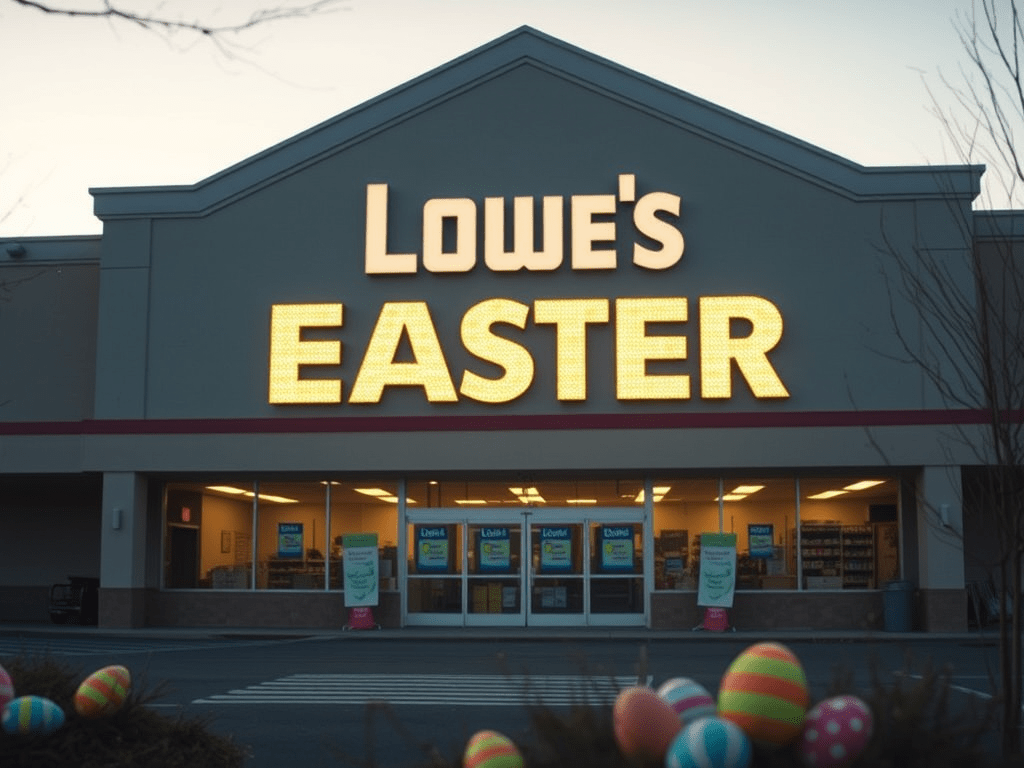
  • Lowe’s to Close All 1,700+ Stores Nationwide for 24 Hours on Easter Sunday

    Mooresville, NC – April 8, 2025 – Lowe’s Companies, Inc. announced today that all of its 1,700+ U.S. stores and contact centers will close for 24 hours on Easter Sunday, April 20, to allow employees time to celebrate the holiday with their families. This marks the fifth consecutive year the home improvement giant has observed the closure, aligning with retailers like Target, Costco, and Sam’s Club .

    Key Details:

    • Reason for Closure: CEO Marvin Ellison emphasized the move as a gesture of appreciation for employees’ “continued dedication,” particularly during the busy spring season .
    • Online Services: While physical stores will be shut, customers can still shop via Lowes.com. Competitor Home Depot will remain open for in-person shopping .
    • State Impact: Texas (144 stores) and Florida (132 stores) have the highest concentrations of Lowe’s locations affected .

    Broader Retail Trends:

    Lowe’s joins a growing list of major chains closing for Easter, including Best Buy, Aldi, and Macy’s, while Walmart, Kroger, and Dollar General remain open . The decision reflects a shift toward prioritizing employee work-life balance amid heightened consumer demand for home improvement projects .

    What’s Next?
    Stores will reopen Monday, April 21, with regular hours. Shoppers are advised to check local store listings for exceptions .


    Sources: FOX 5 DC , The Sun , KPEL 965 .

    #RetailNews #Lowes #EasterClosure #EmployeeAppreciation


  • “Trade Smarter, Not Harder: Master the Hottest Trends in the US Markets Today!”

    1. The Rise of AI and Algorithmic Trading

    Artificial Intelligence (AI) is revolutionizing trading by enabling faster, data-driven decisions. Hedge funds and retail traders alike are using AI-powered tools to analyze market trends, predict price movements, and execute trades at lightning speed.

    • Quantitative Trading: Algorithms analyze vast amounts of historical data to identify profitable opportunities.
    • AI Chatbots: Tools like ChatGPT help traders interpret market news and generate trading ideas.
    • Automated Trading Bots: Platforms like MetaTrader and TradingView allow traders to automate strategies.

    AI is no longer just for Wall Street—retail traders are leveraging these tools to gain an edge.


    2. Meme Stocks & Social Media-Driven Trading

    Remember GameStop ($GME) and AMC ($AMC)? Meme stocks are back in the spotlight, driven by retail traders on platforms like Reddit’s r/WallStreetBets and Twitter (now X).

    • Community-Driven Moves: Retail traders band together to push stocks higher, often against institutional short sellers.
    • Volatility & High Risk: These stocks can surge or crash rapidly, making them both exciting and dangerous.
    • Recent Trends: Stocks like Trump Media ($DJT) and Tesla ($TSLA) continue to see social media-fueled volatility.

    Meme stock trading remains a hot topic, blending finance with internet culture.


    3. Cryptocurrency & Bitcoin ETFs

    Crypto trading is still a major trend, especially with the SEC’s approval of Bitcoin Spot ETFs in early 2024.

    • Bitcoin ($BTC) & Ethereum ($ETH): Remain the top traded cryptos, with institutional money flowing in.
    • Altcoin Season: Traders are eyeing coins like Solana ($SOL), Dogecoin ($DOGE), and new meme coins.
    • Regulation & Security: The SEC’s crackdown on exchanges like Binance and Coinbase has traders cautious.

    With Bitcoin halving in 2024, crypto traders are watching for the next big rally.


    4. Options Trading & 0DTE Strategies

    Options trading has exploded in popularity, especially 0DTE (Zero Days to Expiration) options, which expire the same day.

    • High Risk, High Reward: Traders use 0DTE options for quick profits, but losses can be steep.
    • SPY & QQQ Focus: Most 0DTE trading happens in index ETFs like SPY and QQQ.
    • Retail Participation: Platforms like Robinhood and Webull have made options accessible to beginners.

    This fast-paced trading style is gaining traction but requires discipline and risk management.


    5. The Impact of Federal Reserve Policies

    The Fed’s interest rate decisions directly impact the stock market.

    • Rate Cuts vs. Inflation: Traders are watching for potential rate cuts in 2024, which could boost stocks.
    • Market Reactions: Each Fed meeting causes volatility in the S&P 500, Nasdaq, and bond markets.
    • Dollar Strength: Forex traders monitor the Fed’s moves to trade USD pairs.

    Understanding Fed policies is key for traders in all markets.


    6. Sustainable & ESG Investing

    Environmental, Social, and Governance (ESG) investing is growing as more traders focus on ethical investments.

    • Green Energy Stocks: Companies like Tesla ($TSLA) and NextEra Energy ($NEE) are popular.
    • ESG ETFs: Funds like ICLN (Clean Energy ETF) attract socially conscious investors.
    • Corporate Responsibility: Traders are rewarding companies with strong ESG policies.

    This trend is reshaping how people invest for the long term.


    Final Thoughts

    The US trading landscape is constantly evolving, with AI, meme stocks, crypto, and Fed policies driving the conversation. Whether you’re into day trading, swing trading, or long-term investing, staying informed is the key to success.

    Which of these trading topics interests you the most? Let us know in the comments!

    Happy Trading! 🚀


    Tags: #StockMarket #DayTrading #Investing #Crypto #OptionsTrading #ESG #AITrading
  • Gravitational Waves: Ripples in Spacetime

    Introduction

    Gravitational waves are ripples in the fabric of spacetime, predicted by Einstein’s General Theory of Relativity (1915) and first directly detected in 2015 by LIGO (Laser Interferometer Gravitational-Wave Observatory). These waves are generated by the most violent cosmic events—merging black holes, neutron stars, and supernovae—and provide a new way to observe the universe.


    1. What Are Gravitational Waves?

    • Cause: Accelerating massive objects (e.g., orbiting black holes) warp spacetime, sending out waves at the speed of light.
    • Properties:
    • Frequency: Ranges from 10⁻⁴ Hz (supermassive black holes) to 10³ Hz (stellar mergers).
    • Amplitude: Extremely weak—a passing wave may stretch a 4 km detector by less than a proton’s width!

    2. How Are They Detected?

    A. LIGO & Virgo (Ground-Based Interferometers)

    • Method: Laser beams travel down 4 km arms; a passing wave alters their path length.
    • Sensitivity: Detects strains of ΔL/L ~ 10⁻²¹.
    • Key Detection:
    • GW150914 (2015): First observation of two black holes merging (29+36 M☉, 1.3 billion light-years away).

    B. Future Detectors

    • LISA (2030s): Space-based interferometer for low-frequency waves (supermassive black hole mergers).
    • Pulsar Timing Arrays (NANOGrav): Uses millisecond pulsars to detect nanohertz waves from cosmic strings.

    3. Sources of Gravitational Waves

    SourceFrequencyExample Event
    Binary Black Holes10–1000 HzGW150914 (LIGO)
    Binary Neutron Stars100–2000 HzGW170817 (with gamma-ray burst)
    Supernovae10–1000 HzNot yet detected
    Cosmic Inflation10⁻¹⁸–10⁻¹⁶ HzPrimordial B-modes (future CMB probes)

    4. Scientific Breakthroughs Enabled

    🔹 First “Hearing” of Black Hole Mergers – Confirmed predictions of GR in extreme gravity.
    🔹 Multi-Messenger Astronomy (GW170817) – Gravitational waves + light (kilonova) revealed neutron star mergers create heavy elements (gold, platinum).
    🔹 Tests of General Relativity – No deviations found (yet) from Einstein’s equations.


    5. Unsolved Mysteries

    Do Intermediate-Mass Black Holes Exist? (LIGO may find 100–10⁵ M☉ mergers.)
    What Causes Fast Radio Bursts? (Some may coincide with gravitational waves.)
    Are There Exotic Sources? (Cosmic strings, quark stars?)


    6. Future Prospects

    🔹 Third-Generation Detectors (Einstein Telescope, Cosmic Explorer): 10x more sensitive.
    🔹 Quantum-Enhanced Interferometers: Squeezed light to beat the standard quantum limit.

    #GravitationalWaves #LIGO #GeneralRelativity #BlackHoles #Astrophysics


    Want details on how LIGO filters out seismic noise? Ask below! 🌌🔭

    References

    [1] Abbott et al. (2016). Observation of Gravitational Waves from a Binary Black Hole Merger. PRL, 116(6).
    [2] The LIGO Scientific Collaboration (2019). GWTC-1: A Gravitational-Wave Transient Catalog. arXiv:1811.12907.
    [3] Amaro-Seoane et al. (2017). LISA: Probing the Universe with Gravitational Waves. arXiv:1702.00786.

  • Is Newton’s Law of Gravitation “False”? A Modern Perspective

    Newton’s law of universal gravitation (1687) was one of the most profound scientific breakthroughs in history, accurately describing:

    • Planetary orbits
    • Terrestrial gravity (g ≈ 9.8 m/s²)
    • Tidal forces

    But in light of Einstein’s general relativity (1915), we now understand Newton’s law has fundamental limitations:

    Where Newton’s Law Fails

    1. Extreme Gravity Regimes
    • Near black holes (e.g., Mercury’s orbit requires GR corrections)
    • At velocities approaching light speed (Newton assumes instantaneous action)
    1. Gravitational Time Dilation
    • Clocks run slower in strong gravitational fields (GPS satellites require GR adjustments)
    • Newton’s theory predicts no time curvature
    1. Gravitational Waves
    • Merging black holes emit ripples in spacetime (first detected 2015 by LIGO)
    • Newtonian gravity has no wave solutions
    1. Light Bending
    • Starlight curves around the Sun (confirmed 1919 Eddington expedition)
    • Newton’s corpuscular theory predicts only half the observed deflection

    The Mathematical Difference

    Newton (1687)Einstein (1915)
    F = G(m₁m₂)/r²Gᵤᵥ = 8πTᵤᵥ (field equations)
    Instantaneous actionPropagates at light speed
    Flat spacetimeCurved spacetime metric

    Is Newton “Wrong”?

    Not exactly – it’s a special case approximation:

    • For weak fields (e.g., Earth’s surface) and low velocities (≪ c), Newton and Einstein agree within 0.0001%
    • All NASA moon missions used Newtonian calculations (with minor GR tweaks)

    Modern Status

    • Engineering/Education: Still taught and used for most practical applications
    • Fundamental Physics: Superseded by GR, but remains phenomenally accurate for:
    • Building construction
    • Spacecraft trajectories (except near compact objects)
    • Basic astronomy education

    Key References:

    1. Will (2018) Theory and Experiment in Gravitational Physics
    2. Misner, Thorne & Wheeler (1973) Gravitation
    3. LIGO Collaboration (2016) Phys. Rev. Lett. 116, 061102

    The truth is subtler than “true/false” – Newton’s law remains one of history’s most useful approximations, while GR gives the complete picture.

  • Einstein’s Law of Gravitation (General Relativity) – Simply Explained

    The Core Idea: Gravity = Curved Spacetime

    Einstein’s revolutionary insight (1915) was that gravity isn’t a force like Newton thought – it’s the curvature of spacetime itself caused by mass and energy.

    The Two Key Principles:

    1. Matter tells spacetime how to curve
      (Planets/stars create “dents” in spacetime)
    2. Spacetime tells matter how to move
      (Objects follow the curved paths, which we feel as gravity)

    The Einstein Field Equations (Simplified)

    The full mathematical form looks complex:
    Gμν = 8πG/c4 Tμν

    But here’s what it means in plain terms:

    SymbolMeaningAnalogy
    GμνSpacetime curvatureLike the shape of a trampoline
    TμνMatter/energy contentLike weights placed on the trampoline
    8πG/c4Conversion factorHow strongly mass bends spacetime

    Everyday Examples vs. Newton

    1. Apple Falling:
    • Newton: “A force pulls the apple down”
    • Einstein: “The apple follows Earth’s spacetime curve”
    1. Planet Orbits:
    • Newton: “Invisible force holds planets in ellipses”
    • Einstein: “Planets roll like marbles in the Sun’s spacetime bowl”
    1. Black Holes:
    • Newton: Can’t explain them
    • Einstein: Predicts spacetime curves infinitely at singularities

    3 Mind-Blowing Predictions (All Confirmed!)

    Mercury’s Orbit: Explains a tiny wobble Newton couldn’t
    Light Bending: Stars appear shifted near the Sun (1919 eclipse proved this)
    Gravitational Waves: Ripples in spacetime detected in 2015 (LIGO)


    Why It Matters Today

    • Makes your GPS accurate (satellite clocks tick faster in weaker gravity)
    • Explains the Big Bang and black holes
    • Guides gravitational wave astronomy

    Fun Fact: Near Earth’s surface, Einstein’s equations reduce to Newton’s F = mg! Newton wasn’t “wrong” – just incomplete for extreme cases.

    #GeneralRelativity #Einstein #PhysicsMadeSimple #Spacetime


    Want to see how spacetime curvature is calculated? Ask below! 🌌🔭

  • String Theory: The Unfinished Symphony of Physics

    Introduction

    String theory is one of the most ambitious—and controversial—attempts to unify quantum mechanics and general relativity into a single “Theory of Everything.” Yet, after 50+ years of research, it remains a beautiful mystery, full of untested predictions and mathematical elegance.


    1. The Core Idea: Vibrating Strings, Not Particles

    🔹 What is a string?

    • In string theory, the fundamental building blocks of the universe are tiny, vibrating strings (∼10⁻³⁵ m).
    • Different vibrations = different particles (e.g., photon, electron, quark).

    🔹 Extra Dimensions?

    • Strings require 10 or 11 dimensions (vs. our familiar 4D spacetime).
    • Extra dimensions are “compactified” (curled up too small to see).

    Problem: No experimental proof of strings or extra dimensions exists.


    2. Why String Theory? The Promise of Unification

    TheoryGovernsConflict?
    General RelativityGravity, spacetimeBreaks down at singularities (black holes, Big Bang).
    Quantum Field TheoryParticles, forcesFails to include gravity.
    String TheoryBoth?Attempts to merge them mathematically.

    Success: It naturally includes quantum gravity (gravitons arise as closed-string vibrations).


    3. The Mysteries & Challenges

    A. The Landscape Problem

    • String theory predicts 10⁵⁰+ possible universes (the “multiverse”).
    • Which one corresponds to our universe? No way to select yet.

    B. Lack of Experimental Evidence

    • Strings vibrate at the Planck scale (10⁻³⁵ m)—far beyond current colliders.
    • Indirect tests (e.g., supersymmetry at the LHC) have failed so far.

    C. Competing Versions

    • 5 distinct string theories (Type I, IIA, IIB, Heterotic-O, Heterotic-E) + M-theory (unifying them).
    • Which is correct? Unknown.

    4. Surprising Spin-Offs

    Even unsolved, string theory has advanced physics:
    🔹 Holographic Principle (Black hole info encoded on surfaces).
    🔹 AdS/CFT Correspondence (Links quantum gravity to quantum field theory).
    🔹 Twistor Theory (New math for particle physics).


    5. Is String Theory Science or Philosophy?

    • Critics (e.g., Sabine Hossenfelder):
    • “No predictions = not falsifiable = not science.”
    • Supporters (e.g., Edward Witten):
    • “Math too beautiful to be wrong—we just need deeper insight.”

    The Future

    🔹 New Math Tools – Category theory, machine learning to explore the “landscape.”
    🔹 Astrophysical Tests – Cosmic strings, primordial gravitational waves.
    🔹 Quantum Computers – Simulating string dynamics.

    #StringTheory #TheoryOfEverything #QuantumGravity #PhysicsMysteries


    Want a deep dive on M-theory? Ask below! 🧵🌀

    Key References

    [1] Green, M., Schwarz, J., & Witten, E. (1987). Superstring Theory. Cambridge.
    [2] Polchinski, J. (1998). String Theory. Cambridge.
    [3] Susskind, L. (2006). The Cosmic Landscape. Little, Brown.
    [4] Hossenfelder, S. (2018). Lost in Math. Basic Books.