News Todays 1
The latest news of the day
recent posts
- US Justice Department Releases Redacted Epstein Files, Sparking Criticism from Lawmakers
- Jeffrey Epstein Case: Latest Updates, Unsealed Files, and Where the Investigation Stands Now
- Who Was Jeffrey Epstein? Full Story of the Epstein Case and Files
- “The Universe Runs on Entropy — Here’s How”
- ⭐ How the Human Heart Works: Structure, Function & Complete Circulation Explained
Category: Exam
-

The Core Idea: Gravity = Curved Spacetime Einstein’s revolutionary insight (1915) was that gravity isn’t a force like Newton thought – it’s the curvature of spacetime itself caused by mass and energy. The Two Key Principles: The Einstein Field Equations (Simplified) The full mathematical form looks complex:Gμν = 8πG/c4 Tμν But here’s what it means…
-

Introduction String theory is one of the most ambitious—and controversial—attempts to unify quantum mechanics and general relativity into a single “Theory of Everything.” Yet, after 50+ years of research, it remains a beautiful mystery, full of untested predictions and mathematical elegance. Here’s why string theory is still physics’ greatest unsolved puzzle: 1. The Core Idea:…
-

Introduction Black holes—cosmic monsters where gravity crushes matter into oblivion—challenge our understanding of physics. At their edges (event horizons) and cores (singularities), Einstein’s general relativity (governing gravity) collides with quantum mechanics (ruling the subatomic). This conflict hints at a deeper theory: quantum gravity. Here’s how black holes probe the quantum universe: 1. The Black Hole…
-
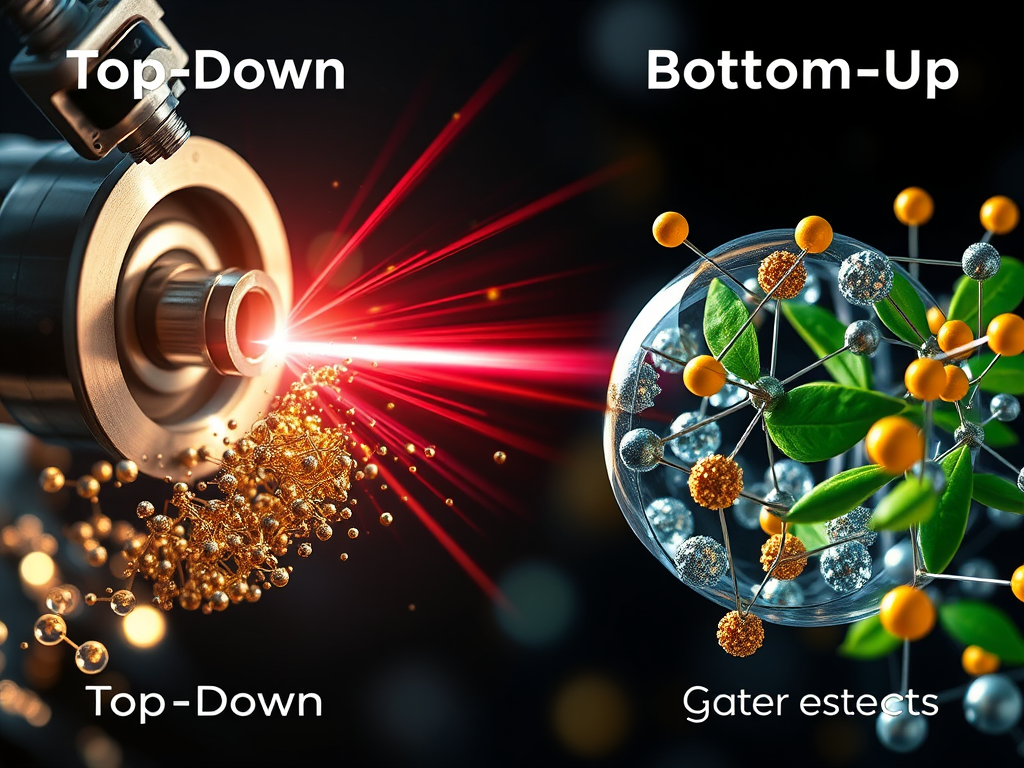
Nanoparticles (1–100 nm) are synthesized using physical, chemical, or biological methods, each offering unique control over size, shape, and functionality. Below is a detailed breakdown of key synthesis techniques with references to peer-reviewed studies. 1. Top-Down Synthesis (Breaking Bulk into Nano) Process: Large materials are physically fragmented into nanoparticles. A. Mechanical Milling B. Laser Ablation…
-

Introduction Nanorobots (or nanobots) are microscopic robots (1–100 nanometers) designed to perform precise tasks at the cellular or molecular level. These tiny machines, powered by nanotechnology, AI, and biomolecular engineering, are set to revolutionize medicine, manufacturing, and environmental science. This blog explores how nanorobots work, their applications, challenges, and future potential. How Do Nanorobots Work?…
-

Introduction Nanoscience is transforming agriculture by offering precision farming, enhanced crop yields, and eco-friendly solutions to global food security challenges. By leveraging nanoparticles, nanosensors, and nano-enabled delivery systems, farmers can optimize resource use, reduce chemical waste, and combat climate change impacts. This blog explores the key applications, benefits, and future prospects of nanoscience in agriculture.…
-

Introduction The intersection of quantum physics and neuroscience is one of the most fascinating and controversial frontiers in science. Could quantum phenomena—like superposition, entanglement, and tunneling—play a role in brain function, cognition, and consciousness? This blog explores the quantum brain hypothesis, key theories, experimental evidence, and future implications. 1. Quantum Physics vs. Classical Neuroscience Classical…
-

Introduction Targeted drug delivery is a major challenge in medicine, where conventional methods often lead to systemic side effects and poor therapeutic efficacy. Nanotechnology offers a groundbreaking solution by enabling precise, controlled, and site-specific drug delivery, minimizing toxicity and maximizing treatment effectiveness. This blog explores how nanotechnology enhances drug delivery, key nanocarrier systems, applications, and…
-

Introduction Nanotechnology is transforming brain surgery, enabling precision-targeted treatments, minimally invasive procedures, and enhanced recovery for conditions like tumors, epilepsy, and neurodegenerative diseases. By leveraging nanoscale materials and devices, surgeons can now operate with unprecedented accuracy while minimizing damage to healthy brain tissue. This blog explores the key applications, breakthroughs, and future potential of nanotechnology…
-
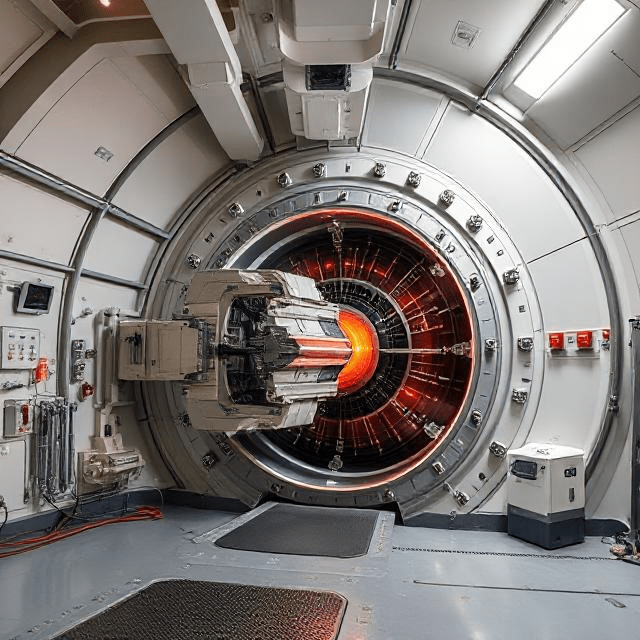
Particle accelerators are the ultimate tools for exploring the fundamental building blocks of the universe. The largest ones push particles to near-light speeds, creating extreme conditions that replicate the early universe. Here’s a look at the biggest and most powerful particle accelerators in the world. 1. Large Hadron Collider (LHC) – CERN, Switzerland/France 🔹 Circumference:…
 News Todays 1