News Todays 1
The latest news of the day
recent posts
- US Justice Department Releases Redacted Epstein Files, Sparking Criticism from Lawmakers
- Jeffrey Epstein Case: Latest Updates, Unsealed Files, and Where the Investigation Stands Now
- Who Was Jeffrey Epstein? Full Story of the Epstein Case and Files
- “The Universe Runs on Entropy — Here’s How”
- ⭐ How the Human Heart Works: Structure, Function & Complete Circulation Explained
Category: technology
-

Introduction Nanotechnology is transforming brain surgery, enabling precision-targeted treatments, minimally invasive procedures, and enhanced recovery for conditions like tumors, epilepsy, and neurodegenerative diseases. By leveraging nanoscale materials and devices, surgeons can now operate with unprecedented accuracy while minimizing damage to healthy brain tissue. This blog explores the key applications, breakthroughs, and future potential of nanotechnology…
-

Introduction Thermoelectric materials are a unique class of substances that can convert waste heat into electricity (Seebeck effect) or use electricity to create cooling (Peltier effect). These materials are critical for energy harvesting, refrigeration, and sustainable power generation. This blog explores how thermoelectric materials work, key types, applications, and future advancements. How Do Thermoelectric Materials…
-
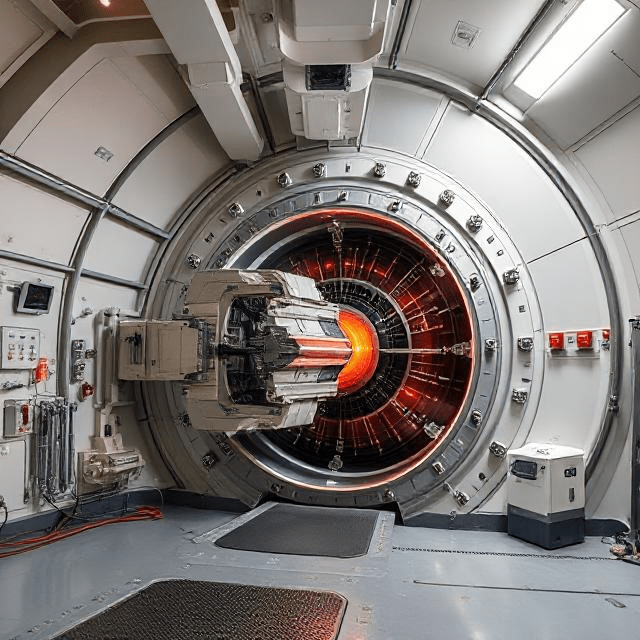
Particle accelerators are the ultimate tools for exploring the fundamental building blocks of the universe. The largest ones push particles to near-light speeds, creating extreme conditions that replicate the early universe. Here’s a look at the biggest and most powerful particle accelerators in the world. 1. Large Hadron Collider (LHC) – CERN, Switzerland/France 🔹 Circumference:…
-

Introduction Particle accelerators are among humanity’s most powerful scientific tools, enabling breakthroughs in physics, medicine, and materials science. By propelling charged particles to near-light speeds, these machines unlock secrets of the universe—from the Higgs boson to new cancer treatments. This blog explores how particle accelerators work, their types, key applications, and future advancements. How Do…
-

Introduction The fusion of nanotechnology and artificial intelligence (AI) is unlocking groundbreaking innovations across medicine, computing, materials science, and robotics. While AI enhances nanoscale research with data-driven insights, nanotechnology provides AI with ultra-efficient hardware for faster, smarter decision-making. This blog explores how these two cutting-edge fields intersect, their key applications, and future possibilities. How AI…
-

Introduction The intersection of nanotechnology and supercomputing is driving unprecedented advancements in computational power, energy efficiency, and miniaturization. As traditional silicon-based computing approaches its physical limits, nanomaterials and quantum-scale innovations are paving the way for next-generation supercomputers capable of solving complex global challenges. This blog explores how nanotechnology enhances supercomputing, key applications, and future possibilities.…
-
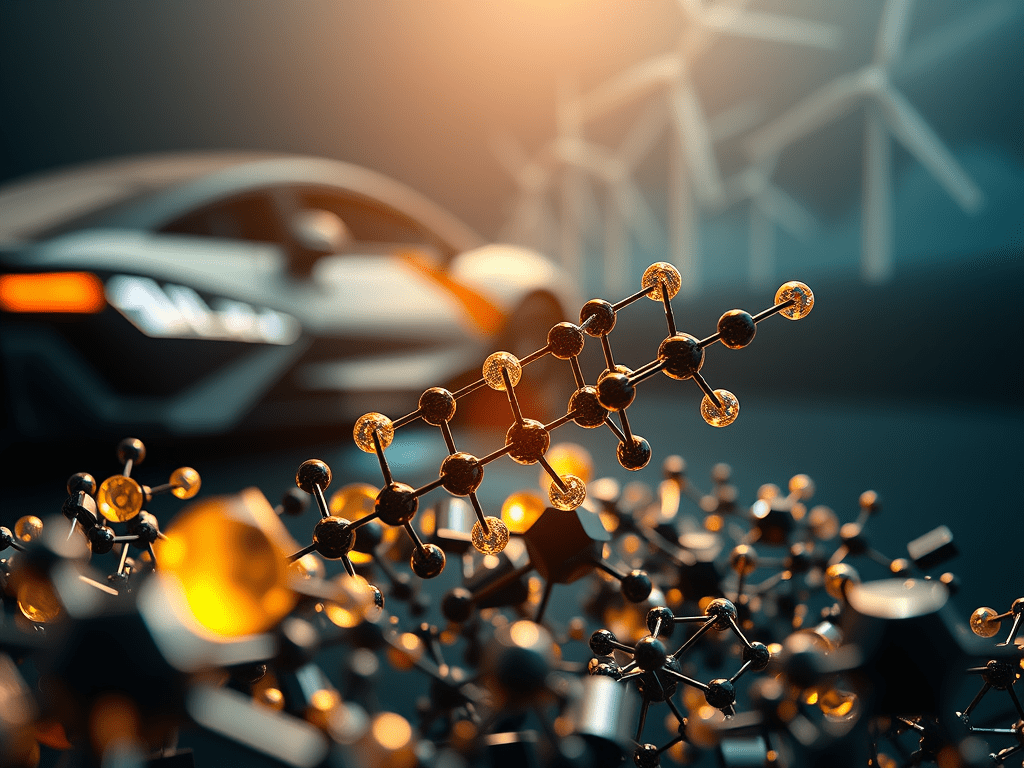
Introduction The demand for high-performance, long-lasting, and fast-charging batteries is growing rapidly, driven by electric vehicles (EVs), renewable energy storage, and portable electronics. Nanomaterials are playing a pivotal role in enhancing battery technology by improving energy density, charge/discharge rates, and lifespan. This blog explores how carbon nanotubes, graphene, silicon nanowires, and other nanomaterials are transforming…
-

Introduction Electric fields are fundamental to countless technologies that power our daily lives. From household appliances to cutting-edge scientific research, the manipulation of electric fields enables innovations in communication, medicine, energy, and more. But what exactly is an electric field, and how is it applied in real-world scenarios? Let’s explore the science behind electric fields…
-

Carbon nanotubes (CNTs), ultra-strong, lightweight cylinders of carbon atoms, are transforming industries from aerospace to medicine. With 200x the strength of steel and unmatched electrical conductivity, this “wonder material” could redefine the future. Here’s how—and why scientists call it the backbone of 21st-century innovation. 1. What Are Carbon Nanotubes? ⚛️ Atomic Structure 🔬 Key Properties…
-

Quantum dots (QDs), nanoscale semiconductor particles just 2–10 nanometers wide, are emerging as a game-changer in displays, medicine, solar energy, and quantum computing. These “artificial atoms” harness quantum mechanics to emit precise colors, detect diseases, and even revolutionize computing. Here’s how they work—and why they’re about to go mainstream. 1. What Are Quantum Dots? ⚛️…
 News Todays 1