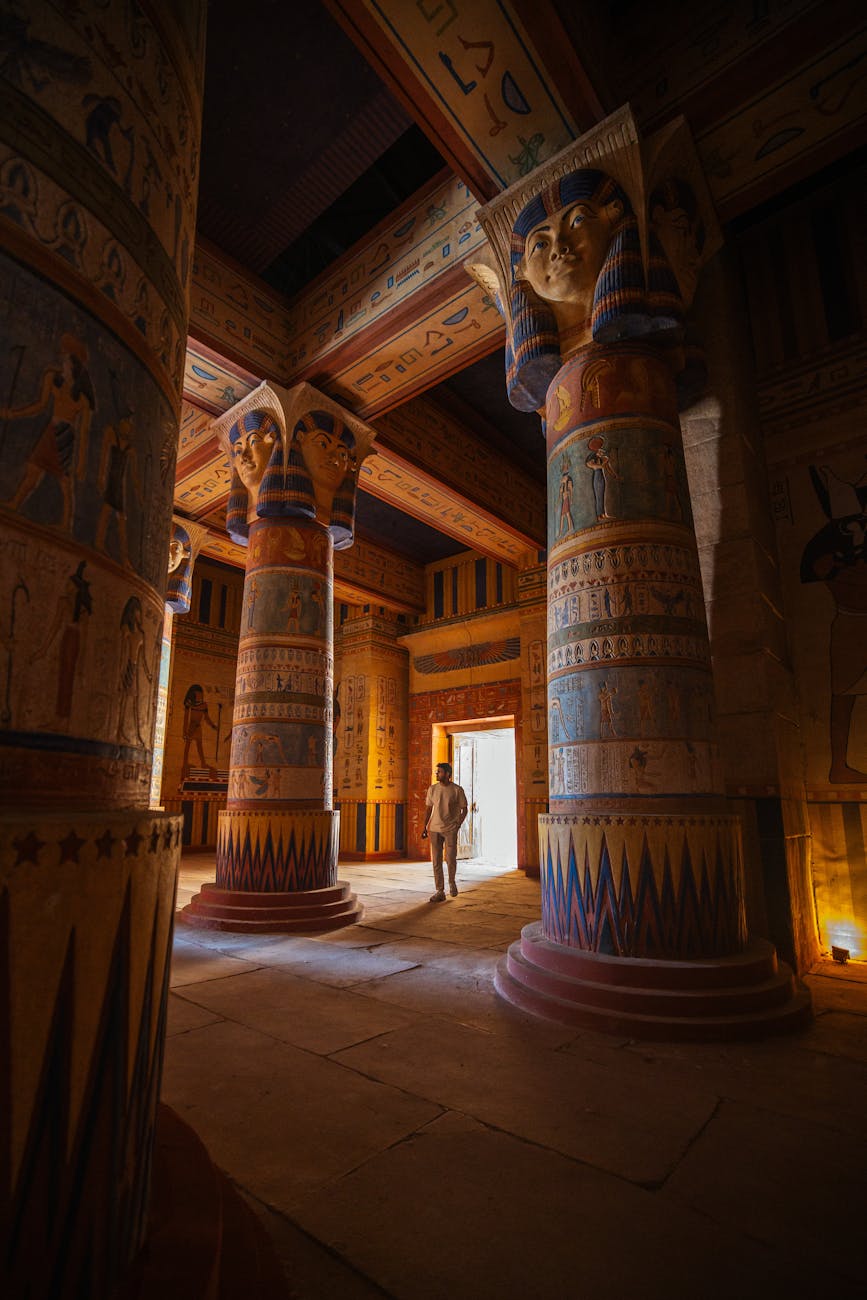
While nanotechnology seems like a modern breakthrough, evidence suggests that Ancient Egyptians may have unwittingly used nanoparticles in their art, medicine, and even mummification. From eternal pigments to antimicrobial coatings, here’s how one of history’s greatest civilization could have been nano pioneers—4,000 years before the term was coined.
1. The Mystery of Egyptian Blue: The First Synthetic Nanomaterial?
🎨 What is Egyptian Blue?
- A vibrant pigment used in tombs, jewelry, and artifacts (since 2500 BCE).
- Chemically identified as calcium copper silicate (CaCuSi₄O₁₀).
🔬 Nanoscale Discovery
- Modern studies (e.g., University of Georgia, 2013) found that Egyptian Blue, when exposed to light, emits infrared photons—a property linked to nanostructured materials.
- Possible accidental creation of quantum dots during high-temperature synthesis (1,000°C+).
Why It Matters Today
- Used in bioimaging and security inks (glows under IR light).
- NASA studies it for next-gen cooling coatings in spacecraft.
2. Nanogold in Ancient Egyptian Medicine
⚕️ Gold Nanoparticles in Healing
- Egyptian medical texts (Ebers Papyrus, 1550 BCE) describe gold-based remedies for inflammation and arthritis.
- Recent analysis of residue in ancient vessels suggests colloidal gold nanoparticles (similar to modern nano-medicine).
💡 Modern Parallel
- Today, gold nanoparticles treat cancer (nanotherapy) and improve rapid diagnostic tests (e.g., COVID-19 lateral flow assays).
3. The “Self-Cleaning” Pyramids & Nanostructured Limestone
🏗️ How Did the Pyramids Stay White for Centuries?
- The Tura limestone casing stones had micro- and nano-scale structures that repelled dust and water.
- A 2012 study in ACS Applied Materials & Interfaces found that sunlight (UV rays) could have triggered a photocatalytic reaction, breaking down organic pollutants—similar to modern self-cleaning nano-titanium coatings.
4. Mummification & Nano-Preservation
⚰️ The Secret Behind “Eternal” Mummies?
- Natron salt (used in mummification) contains nanocrystalline structures that enhance desiccation.
- Some embalming resins show antimicrobial properties—possibly due to natural nano-compounds (e.g., myrrh and frankincense contain terpenes with nano-scale effects).
5. Did the Egyptians Know They Were Using Nanotech?
🔍 Accidental or Intentional?
- Unlike modern labs, Egyptians had no concept of “nanoparticles.”
- Their advanced chemistry and metallurgy (e.g., lead-based cosmetics, gold refining) suggest empirical mastery of material science.
Modern Research & Debates
- British Museum & University College London are reanalyzing artifacts with electron microscopes to find more nano-evidence.
- Skeptics argue it’s just natural material behavior, not deliberate nano-engineering.
Expert Quote
“The Egyptians were the ancient world’s material scientists—they manipulated matter at scales we’re only now understanding.”
– Dr. Philippa Ryan, British Museum archaeochemist
🚀 Want More Ancient Tech Mysteries?
Follow @NewsTodays1 for lost high-tech, archaeological discoveries, and nano-history.







 News Todays 1
Leave a comment