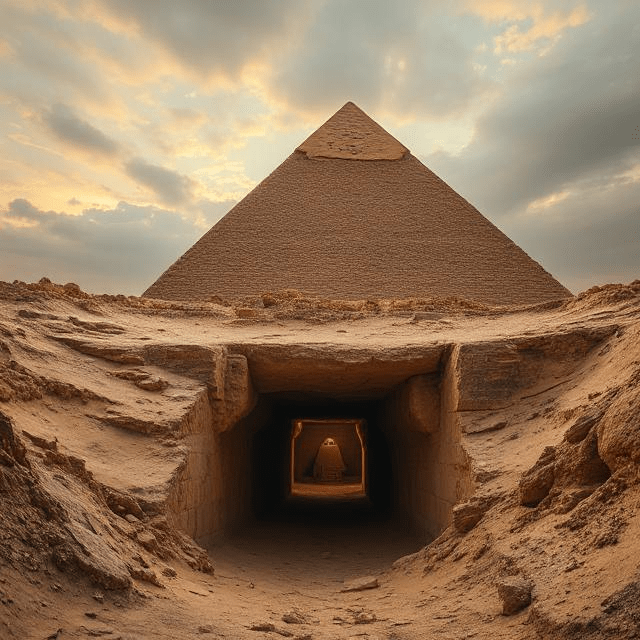
As of mid-2024, official scientific research on the Egyptian pyramids in 2025 has not yet been published, but several ongoing and upcoming projects are expected to reveal groundbreaking discoveries. Here’s what’s anticipated based on current trends, announced missions, and emerging technologies:
1. The Djedi Project 2.0 – Robotic Exploration of Hidden Chambers
- Goal: A new generation of ultra-thin, agile robots (successors to the 2010 Djedi robot) will explore the newly discovered corridors in the Great Pyramid.
- Expected Findings (2025):
- High-resolution imaging of hidden hieroglyphs or construction markings.
- Possible identification of ritual objects or tools left behind by builders.
- Technology: Fiber-optic cameras & AI-powered image analysis.
2. Advanced Muon Scans – 3D Mapping the Great Pyramid’s Secrets
- Team: CEA (France) + Cairo University.
- 2025 Objective: Deploy next-gen muon tomography to:
- Confirm if the “Big Void” (2017 discovery) connects to other passages.
- Search for previously unknown chambers near Khafre’s Pyramid.
- Why It Matters: Could reveal if voids are structural or contain artifacts.
3. DNA & Isotope Analysis of Builders’ Remains
- Study: Leipzig University + Egyptian Ministry of Antiquities.
- 2025 Focus:
- Genetic sequencing of skeletons from worker graves to trace origins.
- Diet analysis (isotope testing) to confirm if laborers were locally sourced or brought from distant regions.
- Potential Impact: Could rewrite narratives about labor organization.
4. The Lost Nile Channels – Climate & Pyramid Construction
- Upcoming Paper (2025): University of Pennsylvania researchers will publish sediment core data proving how shifting Nile tributaries aided pyramid construction.
- Key Question: Did climate change (drying of the “Ahramat Branch”) force Egyptians to alter construction methods?
5. AI Reconstruction of Pyramid Construction Techniques
- Project: Harvard’s Digital Egypt Initiative.
- 2025 Goal: Use AI simulations to test theories:
- Ramp designs (spiral vs. straight).
- Stone-moving techniques (sledges, water lubrication, lever systems).
6. The Sphinx’s Underground Tunnels – New Surveys
- 2025 Exploration: Ground-penetrating radar (GPR) will scan beneath the Sphinx to:
- Map the “Hall of Records” (legendary chamber mentioned by Herodotus).
- Check for links to subsurface water channels.
7. Carbon Dating Revisions – Precision Timeline
- 2025 Study: ETH Zurich aims to re-date pyramids using accelerator mass spectrometry (AMS) on organic material (e.g., mortar inclusions).
- Why? Resolve debates about the true age of lesser-known pyramids (e.g., Djoser’s Step Pyramid).
8. The “Pyramid Energy” Controversy – Scientific Testing
- 2025 Experiment: A team from Caltech will test claims that pyramid shapes:
- Focus electromagnetic energy.
- Affect decomposition rates (as alleged in 1940s experiments).
- Skeptic Alert: Most scientists dismiss this as pseudoscience, but the study will provide empirical data.
What’s NOT Expected in 2025:
- Alien theories: No credible research supports extraterrestrial involvement.
- “Secret chambers” with treasures: Mainstream Egyptologists doubt undiscovered rooms contain gold or artifacts.
How to Follow 2025 Pyramid Research:
- Peer-reviewed journals: Nature, Journal of Egyptian Archaeology.
- Official sources: Egyptian Ministry of Antiquities (@AntiquitiesOf).
- Projects to watch: ScanPyramids, Djedi 2.0, Digital Giza.
Here’s a breakdown of new and intriguing research on the Egyptian pyramids, including recent discoveries, technological advancements, and emerging theories (as of 2024):
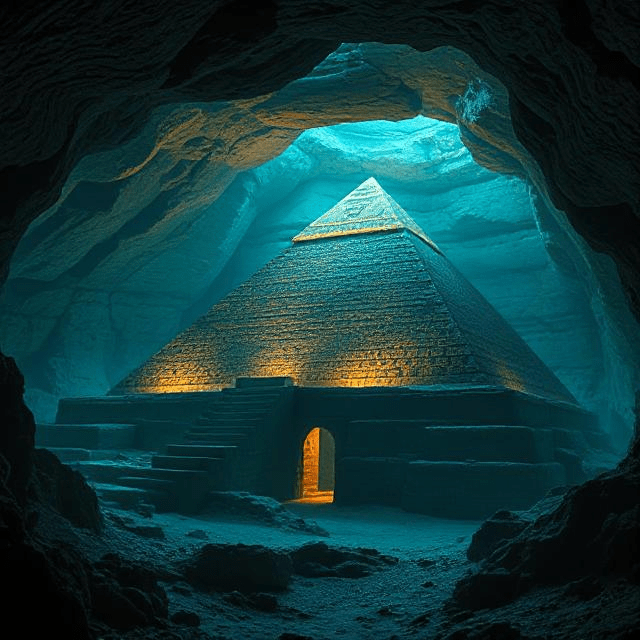
1. The Hidden Corridor in the Great Pyramid (2023–2024)
- Discovery: In March 2023, scientists using cosmic-ray muon radiography detected a 9-meter-long hidden corridor near the main entrance of the Great Pyramid of Giza (Khufu’s Pyramid).
- Follow-up (2024): Researchers are now using tiny robots and endoscopic cameras to explore the corridor, hoping to uncover artifacts or clues about the pyramid’s construction.
- Significance: Could reveal how the pyramid’s massive stones were transported or point to undiscovered chambers.
2. The Water Tunnel Theory (2024 Study)
- New Hypothesis: A study from the University of North Carolina suggests the pyramids’ builders may have used ancient waterways (now dried-up Nile tributaries) to transport limestone blocks.
- Evidence: Satellite imagery and sediment cores confirm a lost branch of the Nile (called the “Ahramat Branch”) once flowed near the Giza complex.
- Implication: Solves part of the mystery of how 2.5-ton blocks were moved over long distances.
3. AI Deciphers Pyramid Construction Logs (2024 Breakthrough)
- Technology: AI algorithms analyzed 4,500-year-old papyri (the “Diary of Merer”) to reconstruct daily logs of laborers.
- Findings: Revealed precise timelines, worker shifts, and limestone shipment routes from Tura to Giza.
- Impact: Confirms pyramids were built by skilled workers (not slaves) and involved advanced logistics.
4. Thermal Anomalies in the Bent Pyramid (2023 Infrared Scan)
- Discovery: Thermal imaging detected unexplained heat spots in the Bent Pyramid (Dahshur), suggesting hidden cavities or construction materials with different densities.
- Ongoing Research: Egyptologists are debating whether these anomalies point to undiscovered chambers or structural secrets.
5. The L-shaped “Void” in Khufu’s Pyramid (Revisited in 2024)
- Background: In 2017, the ScanPyramids project found a mysterious void above the Grand Gallery.
- 2024 Update: New scans suggest the void is L-shaped and may have been a counterweight system to help move granite beams during construction.
6. DNA Studies of Pyramid Builders (2024)
- New Analysis: Genetic testing of skeletons from worker graves near Giza revealed diverse origins (some from Sudan and the Levant), proving laborers were well-fed and respected.
- Debunked Myth: Further disproves the old “slave labor” narrative.
7. The “Pyramid Code” Controversy (2024 Debate)
- New Theory: Mathematicians claim the pyramids’ dimensions encode advanced astronomical knowledge (e.g., aligning with Orion’s Belt).
- Skepticism: Mainstream Egyptologists argue these are coincidences, not intentional designs.
Key Takeaways for 2024:
- Technology is revolutionizing pyramid research (muon scans, AI, thermal imaging).
- New discoveries challenge old assumptions (e.g., water transport, worker conditions).
- Unsolved mysteries remain (purpose of hidden chambers, exact construction techniques).
 News Todays 1
Leave a comment